GLP Side Effects
Understand GLP Side Effects And What They May Mean
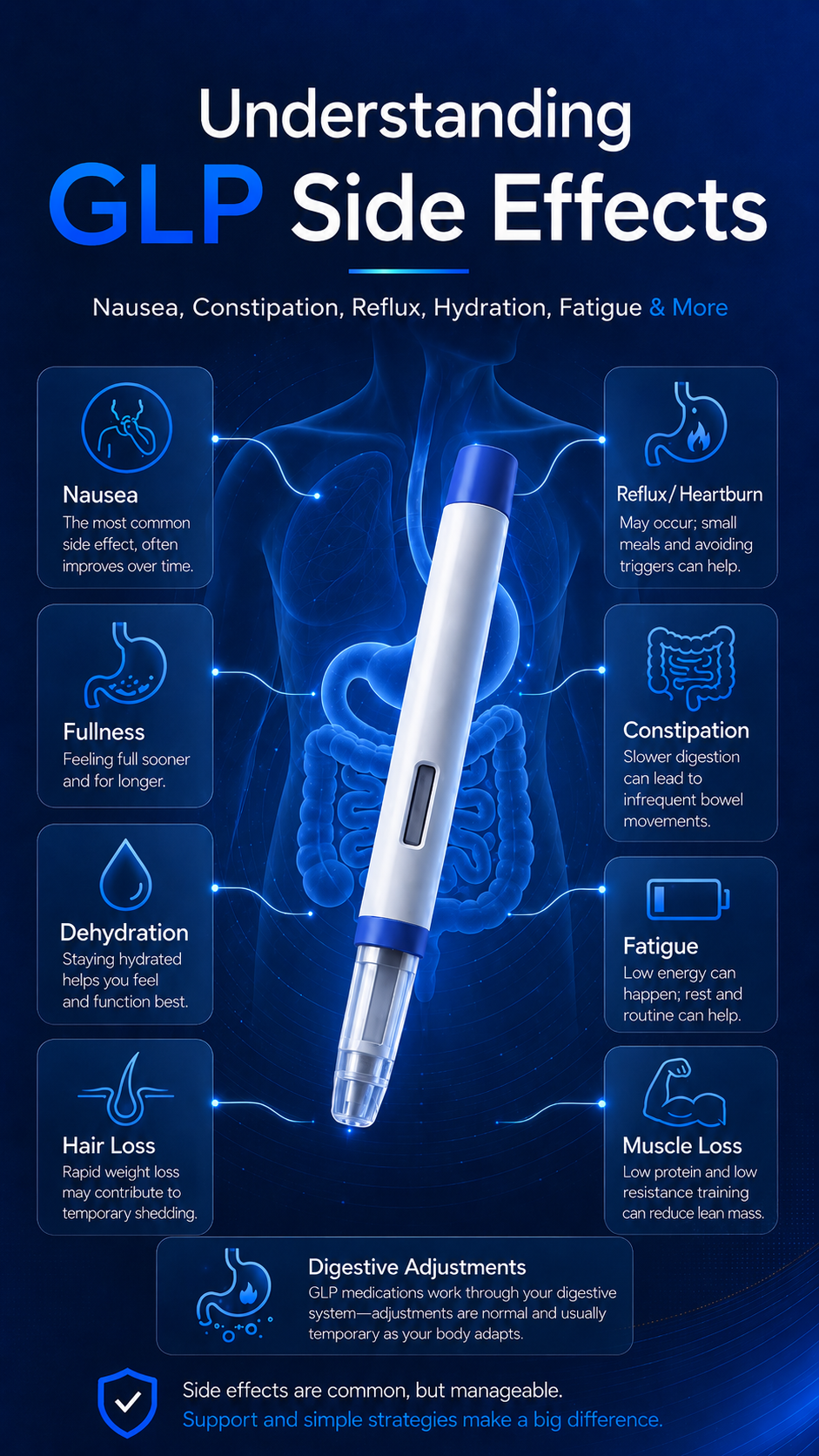
GLP side effects often involve the stomach, gut, appetite, hydration, energy, and digestion because these medications work with body signals that affect fullness and food movement.
First, many side effects make more sense when you understand how GLP medications work. These medications can help fullness last longer, but that same effect may also cause nausea, reflux, constipation, bloating, or feeling too full.
However, side effects should not leave patients confused or afraid. Therefore, this guide explains common symptoms, why they happen, what may help, and when to contact a provider.
Direct Answer
What Are GLP Side Effects?
GLP side effects are symptoms that may happen while taking GLP medications, especially symptoms linked to digestion, appetite, bowel changes, hydration, and food tolerance.
The Simple Explanation
GLP medications affect hunger, fullness, stomach emptying, insulin signals, and food intake. Because of that, many side effects show up in the stomach and gut.
Also, side effects may appear when treatment starts, when a dose increases, when meals are too large, when fluids drop, or when certain foods feel harder to tolerate.
The Most Common Pattern
Most patients who feel side effects describe digestive symptoms first. For example, nausea, constipation, diarrhea, reflux, burping, bloating, low appetite, or feeling too full may happen.
However, severe, lasting, or unusual symptoms deserve medical guidance. Therefore, patients should know the difference between common discomfort and warning signs.
Why They Happen
Why GLP Side Effects Often Start In The Gut
GLP medications work partly through gut and brain signals. So, side effects often happen in the same systems that create fullness, appetite changes, and slower digestion.
Food May Leave The Stomach More Slowly
First, GLP signals can slow how fast food leaves the stomach. This may help fullness last longer after eating.
However, slower stomach emptying can also make larger meals feel uncomfortable. As a result, patients may feel nausea, reflux, bloating, burping, or heavy fullness.
Appetite May Drop Quickly
Next, lower appetite can reduce total food and fluid intake. Therefore, patients may accidentally eat too little protein or drink too little water.
Because low intake can affect energy, bowel habits, and hydration, a side effect plan should include food and fluid support.
Bowel Habits May Change
Also, changes in meal size, gut movement, fiber, fluids, and activity can affect bowel patterns. Some patients feel constipated, while others may have diarrhea.
Therefore, patients should track stool changes, fluids, fiber tolerance, and symptom timing.
Dose Changes May Trigger Symptoms
Finally, side effects may increase when treatment starts or when the dose changes. The body may need time to adjust.
However, patients should not ignore strong symptoms. A provider can decide whether timing, dose, hydration, food changes, or evaluation matters most.
Quick Reference
GLP Side Effects At A Glance
This table gives a simple overview of common GLP side effects, why they may happen, and what patients should watch.
Side Effect Quick Reference Table
| Side Effect | Why It May Happen | What To Watch |
|---|---|---|
| Nausea | Slower stomach emptying, dose changes, large meals, high-fat foods, or low intake. | How often it happens, whether fluids stay down, and whether symptoms improve. |
| Constipation | Lower food intake, lower fluids, slower gut movement, low fiber, or less movement. | Pain, bloating, days without a bowel movement, or worsening symptoms. |
| Diarrhea | Gut adjustment, food tolerance changes, dose changes, or certain meal patterns. | Fluid loss, dizziness, weakness, or diarrhea that continues. |
| Reflux or heartburn | Fullness, slower stomach emptying, large meals, late meals, or trigger foods. | Chest burning, sour taste, burping, nighttime symptoms, or pain. |
| Vomiting | Severe nausea, food intolerance, dose change, illness, or another medical issue. | Inability to keep fluids down, dehydration signs, or repeated vomiting. |
| Fatigue | Low food intake, low protein, dehydration, poor sleep, or body adjustment. | Weakness, dizziness, low intake, or fatigue that limits daily life. |
| Dehydration | Low fluids, vomiting, diarrhea, sweating, or low thirst. | Dark urine, dizziness, dry mouth, confusion, or low urination. |
Nausea
Why Nausea Happens On GLP Medications
Nausea may happen because GLP medications can slow digestion, increase fullness, change appetite signals, and make large or heavy meals harder to tolerate.
Fullness Can Feel Like Nausea
First, some patients feel full much sooner than expected. If they keep eating past early fullness, the stomach may feel heavy or upset.
Meal Size Matters
Next, large portions may feel harder during treatment. Therefore, smaller meals may reduce stomach pressure and discomfort for some patients.
High-Fat Meals May Feel Heavy
Also, fried, greasy, or very rich foods may sit heavier for some patients. This does not mean every patient must avoid all fat, but tolerance matters.
Persistent Nausea Needs Attention
Finally, nausea that keeps you from drinking, eating, working, or functioning deserves provider guidance.
Nausea Support Checklist
- Eat smaller portions
- Stop at early fullness
- Avoid forcing meals
- Choose lighter foods when symptoms flare
- Sip fluids slowly
- Track dose timing and meal timing
- Contact a provider if nausea persists
Constipation
Why Constipation Can Happen During GLP Treatment
Constipation may happen when appetite drops, food intake decreases, fluids fall, fiber changes, gut movement slows, or activity decreases.
Less Food Can Mean Less Stool
First, when patients eat much less, the body may produce less stool. This can change bowel rhythm.
Fluids Matter
Next, low fluid intake can make stool harder. Because appetite and thirst may change, patients may need a more intentional hydration routine.
Fiber Needs A Careful Approach
Also, fiber may help some patients. However, too much fiber too quickly can worsen bloating, gas, or discomfort.
Pain Or Long Delays Need Guidance
Finally, constipation with severe pain, vomiting, major bloating, or several days without relief should prompt medical guidance.
Constipation Support Checklist
- Sip fluids throughout the day
- Add fiber slowly when tolerated
- Include gentle daily movement when appropriate
- Track bowel frequency
- Do not ignore severe pain
- Ask before using laxatives often
- Review symptoms with your provider
Diarrhea
Why Diarrhea May Happen On GLP Medications
Diarrhea may happen as the gut adjusts, after dose changes, with food tolerance changes, or during illness unrelated to medication.
Gut Adjustment Can Change Stool
First, GLP treatment can change gut signaling and digestion. As a result, some patients may notice looser stools.
Food Triggers May Become More Noticeable
Next, certain foods may feel different than they did before treatment. Rich foods, large meals, or very sweet foods may bother some patients.
Hydration Becomes More Important
Also, diarrhea can lower fluids and electrolytes. Therefore, patients should watch for dizziness, weakness, dry mouth, or dark urine.
Ongoing Diarrhea Needs Review
Finally, diarrhea that continues, worsens, or causes dehydration concerns should receive medical guidance.
Diarrhea Support Checklist
- Focus on fluids
- Use gentle foods when needed
- Track food triggers
- Watch for dehydration signs
- Avoid very large meals
- Contact a provider if symptoms continue
Reflux And Heartburn
Why Acid Reflux Or Burping May Increase
Reflux, heartburn, and burping may happen when food stays in the stomach longer, meals are too large, or trigger foods increase stomach discomfort.
Fullness Can Increase Pressure
First, slower stomach emptying can make fullness last longer. If a meal feels too large, pressure may increase and reflux may feel worse.
Late Meals May Feel Harder
Next, lying down soon after a large meal may worsen reflux for some patients. Therefore, timing can matter.
Trigger Foods Vary
Also, spicy foods, greasy foods, acidic foods, caffeine, or large portions may affect some people. However, each patient has different triggers.
Chest Pain Needs Urgent Care
Finally, chest pain, shortness of breath, fainting, or severe symptoms need urgent medical attention.
Reflux Support Checklist
- Use smaller meals
- Eat slowly
- Avoid lying down right after eating
- Track trigger foods
- Watch nighttime symptoms
- Get urgent help for chest pain or severe symptoms
Vomiting And Dehydration
When Vomiting Or Dehydration Becomes More Serious
Vomiting and dehydration matter because they can quickly reduce fluids, electrolytes, energy, and safety.
Vomiting Is More Concerning Than Mild Nausea
First, nausea may feel uncomfortable, but vomiting raises bigger hydration concerns. Repeated vomiting can become unsafe quickly.
Fluids Matter Most During Vomiting
Next, patients should pay attention to whether fluids stay down. If fluids do not stay down, medical guidance matters.
Dehydration Has Warning Signs
Also, dizziness, very dark urine, dry mouth, confusion, weakness, or little urination may signal dehydration risk.
Severe Symptoms Need Prompt Care
Finally, repeated vomiting, severe belly pain, fainting, confusion, or inability to keep fluids down should prompt urgent medical attention.
Warning Signs To Take Seriously
- Repeated vomiting
- Fluids will not stay down
- Severe or worsening belly pain
- Fainting or confusion
- Very dark urine or little urination
- Severe weakness
- Chest pain or shortness of breath
When To Get Help
When Should You Contact A Provider About GLP Side Effects?
Patients should contact a provider when side effects feel severe, last too long, limit fluids or food, cause dehydration concerns, or feel unusual for their body.
Provider Guidance Table
| Symptom Pattern | Why It Matters | Best Next Step |
|---|---|---|
| Mild nausea that improves | The body may adjust, especially early in treatment. | Track meals, portions, fluids, and dose timing. |
| Nausea that prevents eating or drinking | Low intake and dehydration risk may increase. | Contact your provider. |
| Repeated vomiting | Fluid loss can become unsafe. | Seek prompt medical guidance. |
| Severe belly pain | Severe pain can signal a more serious issue. | Seek urgent medical care. |
| Constipation with severe pain or vomiting | This pattern needs medical review. | Contact a provider promptly. |
| Dizziness, confusion, or little urination | These signs may suggest dehydration or another concern. | Seek medical guidance right away. |
| Chest pain or shortness of breath | These symptoms may signal an emergency. | Seek emergency care. |
Do Not Tough Out Severe Symptoms
First, patients sometimes think side effects prove the medication works. That is not the right goal. The goal is safe, steady, provider-guided progress.
Bring Details To Follow-Up
Next, track symptom timing, dose timing, meals, fluids, bowel changes, and severity. This helps your provider understand what may be happening.
Dose Changes
Why Side Effects May Change When The Dose Changes
Side effects may appear or increase when a GLP medication starts or when the dose changes because the body has to adjust to stronger signaling.
Starting Treatment
First, early treatment may bring appetite changes, nausea, fullness, or bowel changes. Tracking helps patients see patterns.
Increasing The Dose
Next, a dose increase may make fullness or digestive symptoms stronger for some patients.
Eating The Same Portions
Also, meals that worked before may feel too large after treatment starts. Therefore, portion changes may help.
Hydration Gaps
Because appetite and thirst may drop, hydration needs attention during the first weeks and after dose changes.
Provider Adjustments
However, patients should not adjust medication alone. Providers can guide timing, dose decisions, and symptom support.
Long-Term Patterns
Finally, some symptoms improve with time. But symptoms that stay severe need review.
Food And Fluids
Nutrition And Hydration Can Help Many GLP Side Effects
Food and fluid habits cannot solve every side effect, but they can help patients manage common digestive symptoms and avoid low intake.
Smaller Meals May Feel Better
First, large meals may worsen fullness, nausea, reflux, or bloating. Smaller meals can help some patients feel more comfortable.
Protein Still Matters
Next, low appetite can reduce protein intake. Therefore, patients should plan simple protein foods they can tolerate.
Gentle Foods Can Help During Flares
Also, when symptoms flare, some patients do better with simple foods, smaller portions, and slower eating.
Hydration Supports Digestion
First, fluids support bowel function, energy, and overall safety. This matters when constipation, diarrhea, vomiting, or low appetite appears.
Sipping May Work Better Than Large Drinks
Next, large drinks with meals may worsen fullness for some patients. Sipping between meals may feel easier.
Low Fluids Need Fast Attention
Finally, dizziness, dry mouth, little urination, or weakness should prompt medical guidance.
Side Effect Food Strategy Table
| When You Feel | Try This First | Watch For |
|---|---|---|
| Nauseated | Small portions, slower eating, lighter foods, and small sips. | Vomiting, dehydration signs, or symptoms that do not improve. |
| Too full | Stop earlier, save food for later, and avoid forcing meals. | Reflux, pain, or inability to eat enough. |
| Constipated | Fluids, gentle movement, fiber as tolerated, and provider advice. | Pain, vomiting, or several days without relief. |
| Low energy | Review protein, fluids, meal rhythm, and sleep. | Severe weakness, dizziness, or very low intake. |
Medication Differences
Do Side Effects Differ Between Semaglutide And Tirzepatide?
Semaglutide and tirzepatide can both cause digestive side effects, but each patient’s response can differ based on dose, timing, health history, food choices, and individual tolerance.
High-Level Side Effect Comparison
| Topic | Semaglutide | Tirzepatide |
|---|---|---|
| Science pathway | GLP-1 receptor pathway education. | GLP-1 and GIP-related pathway education. |
| Common patient questions | Nausea, constipation, reflux, appetite loss, and nutrition. | Nausea, diarrhea, constipation, appetite loss, and comparison questions. |
| What affects tolerance | Dose timing, meal size, food choices, fluids, and health history. | Dose timing, meal size, food choices, fluids, and health history. |
| Best next page | Semaglutide Guide | Tirzepatide Guide |
Do Not Compare Symptoms Online Alone
First, one person may tolerate a medication well while another struggles. Online stories cannot review your labs, history, dose, or other medications.
Use Symptoms To Guide Better Care
Next, symptoms give useful feedback. A provider can help decide whether food changes, hydration, timing, dose review, or medical evaluation makes sense.
Common Mistakes
Common Mistakes That Can Make GLP Side Effects Worse
Some side effects feel worse when patients eat too much at once, drink too little, skip protein, ignore constipation, or wait too long to ask for help.
Mistake And Better Step Table
| Common Mistake | Why It Can Backfire | Better Step |
|---|---|---|
| Eating the same large portions | Large meals may worsen nausea, fullness, reflux, or bloating. | Try smaller portions and stop at early fullness. |
| Skipping fluids | Low fluids can worsen constipation, fatigue, and dehydration risk. | Sip fluids throughout the day. |
| Ignoring protein | Low intake can reduce muscle support and energy. | Plan easy protein options when appetite is low. |
| Adding too much fiber at once | Sudden fiber increases may worsen gas or bloating. | Add fiber slowly and track tolerance. |
| Waiting too long to report symptoms | Severe symptoms can lead to dehydration or poor intake. | Contact a provider when symptoms limit food, fluids, or daily life. |
| Changing medication alone | Unsupervised changes may create safety concerns. | Ask your provider before changing dose or schedule. |
Trusted Medical Sources
Helpful Sources If You Want To Keep Learning
RealGLP.Life explains GLP side effects in plain language. These trusted health sources can help you keep learning from medical and government organizations.
NIDDK
The National Institute of Diabetes and Digestive and Kidney Diseases explains prescription weight-management medicines, including possible side effects and why medical guidance matters.
MedlinePlus
MedlinePlus offers patient-friendly drug information from the National Library of Medicine, including common semaglutide side effects and when to tell a doctor.
U.S. Food And Drug Administration
The FDA shares medication safety updates and public alerts. Its GLP-1 information helps patients understand why medication quality, source, and oversight matter.
American Diabetes Association
The American Diabetes Association explains concerns around GLP-1 and dual GIP/GLP-1 products and supports safer, evidence-informed medication conversations.
Patient Journey
Which Side Effect Topic Should You Read First?
The best side effect guide depends on what you feel right now and how much the symptom affects eating, drinking, digestion, and daily life.
Side Effect Learning Path Table
| What You Notice | What You May Wonder | Best Next Guide |
|---|---|---|
| Upset stomach or queasiness | Why do I feel nauseated? | GLP Nausea |
| Hard stools or fewer bowel movements | Why am I constipated? | GLP Constipation |
| Loose stools | Why do I have diarrhea? | GLP Diarrhea |
| Burning, burping, or sour taste | Why do I have reflux? | GLP Acid Reflux |
| Low energy | Why am I tired? | GLP Fatigue |
| Throwing up | When is vomiting serious? | GLP Vomiting |
| Dizziness, dark urine, or dry mouth | Could I be dehydrated? | GLP Dehydration |
Provider-Guided Support
Side Effects Should Guide Better Care, Not Shame
Side effects give useful information. A provider can help connect symptoms to dose timing, food intake, hydration, medication tolerance, and medical history.
Symptoms Help Providers Understand Your Pattern
First, side effects tell a story. Your provider may ask when the symptom started, what dose you use, what you ate, how much you drank, and how severe it feels.
Side Effects Do Not Mean Failure
Next, symptoms do not mean you did something wrong. They mean your body needs attention, support, and sometimes a care plan adjustment.
Provider Guidance Matters Most With Strong Symptoms
Finally, persistent nausea, vomiting, dehydration signs, severe belly pain, chest pain, or symptoms that limit eating and drinking need medical review.
Recrea Health & Wellness
Recrea Health & Wellness is the licensed medical organization behind RealGLP.Life and can provide provider-guided support when appropriate.
Contact Recrea
- Call: 330-952-0391
- Email: info@recreahealth.com
- Visit: 2425 Medina RD Suite 101, Medina, OH 44256
Learning Library
What To Read Next About GLP Side Effects
GLP side effects connect to science, nutrition, hydration, medication type, and provider-guided care. So, choose the guide that matches your next question.
Nausea
First, learn why nausea happens and how meal size, dose timing, and food tolerance may matter.
Constipation
Next, learn how fluids, fiber, gut movement, and lower food intake may affect bowel habits.
Diarrhea
Also, learn why looser stools can happen and when hydration support becomes important.
Acid Reflux
Then, learn why slower digestion, fullness, and large meals may affect reflux or burping.
Fatigue
However, low energy may connect to low intake, low fluids, sleep, or adjustment periods.
Dehydration
Finally, learn the warning signs of dehydration and why vomiting or diarrhea needs attention.
Expert Tip
Angela Jayes, NP On GLP Side Effects
Do Not Wait Until Symptoms Feel Unmanageable
Side effects often improve with the right support, but patients should speak up early when symptoms affect food, fluids, bowel habits, energy, or daily life.
Track The Details
Also, write down what happened, when it happened, what you ate, how much you drank, and what dose you used. These details help guide better care.
Think Safety First
Finally, severe pain, repeated vomiting, dehydration signs, chest pain, or shortness of breath need prompt medical attention.
FAQ
Common GLP Side Effect Questions
These short answers help patients understand side effects before reading deeper symptom guides.
What are the most common GLP side effects?
Many common GLP side effects involve digestion. For example, patients may notice nausea, constipation, diarrhea, reflux, burping, bloating, vomiting, low appetite, or fatigue.
Why do GLP medications cause stomach side effects?
GLP medications affect fullness, appetite, and stomach emptying. Because food may leave the stomach more slowly, some patients feel nausea, reflux, bloating, or early fullness.
Are GLP side effects dangerous?
Many side effects are mild or manageable, but some symptoms need medical care. Severe belly pain, repeated vomiting, dehydration signs, chest pain, or trouble breathing need prompt attention.
Can food choices affect side effects?
Yes. Meal size, fat content, fluid intake, fiber, and eating speed may affect symptoms for some patients. However, personal tolerance varies.
Should I stop my medication if I have side effects?
Do not stop or change your medication without guidance unless you have emergency symptoms and need urgent care. Contact your provider for next steps.
When should I contact a provider?
Contact a provider when symptoms feel severe, continue, worsen, limit eating or drinking, cause dehydration concerns, or feel unusual for your body.
Educational Use Only
This GLP Side Effects Hub Does Not Replace Medical Care
Education Helps You Understand Symptoms
RealGLP.Life provides educational content only. It does not provide medical advice, diagnosis, or treatment.
Your Provider Guides Personal Decisions
Because side effects depend on your medication, dose, health history, symptoms, fluids, food intake, and other medicines, speak with a qualified healthcare provider for personal guidance.
Urgent Symptoms Need Prompt Care
If you have severe belly pain, repeated vomiting, dehydration signs, chest pain, shortness of breath, fainting, confusion, or signs of a medical emergency, seek medical care right away.
Need Help Understanding GLP Side Effects?
Start with clear education. Then, when symptoms feel confusing, uncomfortable, or concerning, speak with a qualified provider who can guide your next step.