
Semaglutide Results Timeline
What To Expect On Semaglutide Over Time
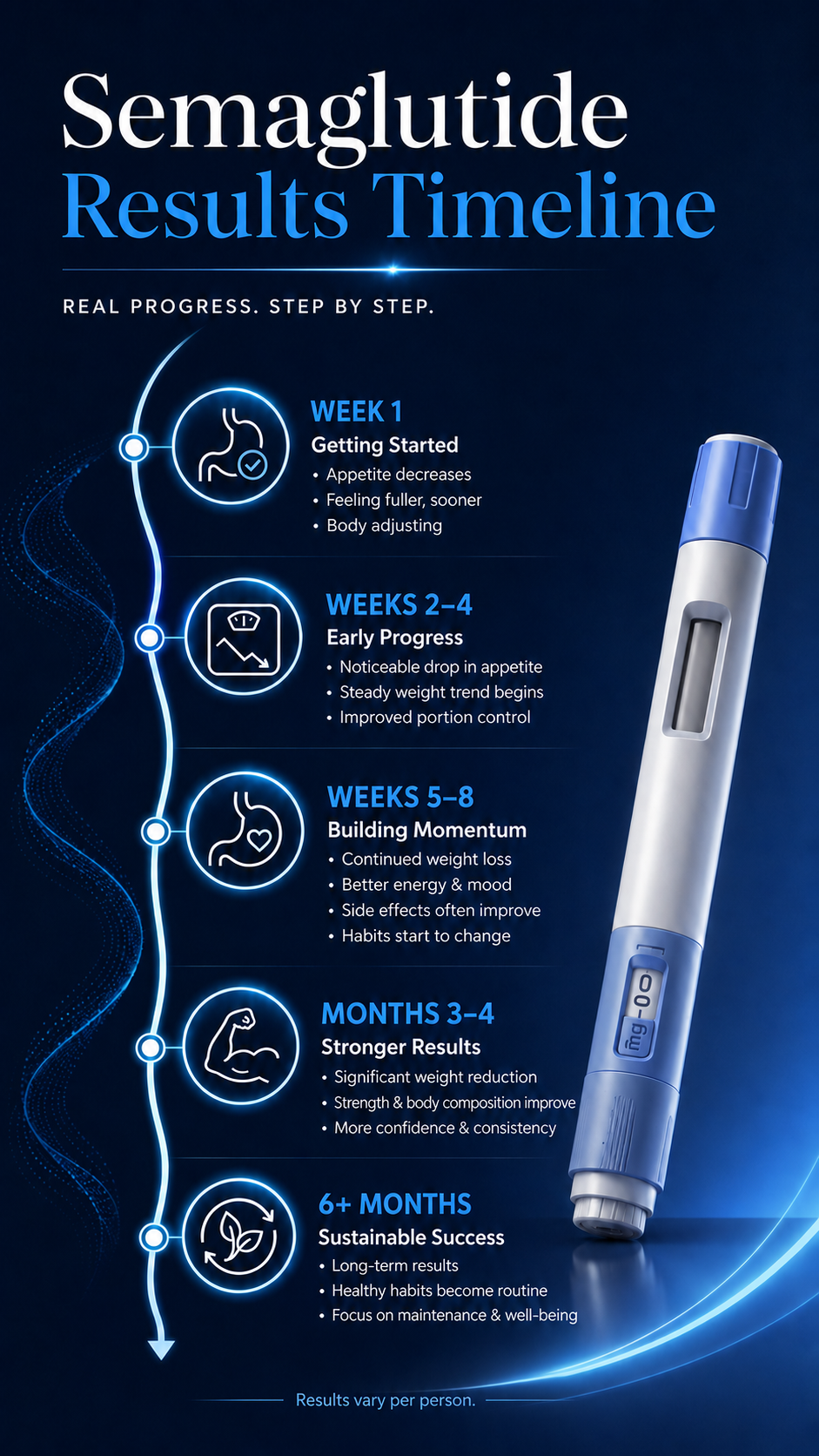
The semaglutide results timeline often starts with appetite and fullness changes, then moves into habit changes, body weight changes, side effect patterns, plateaus, and long-term maintenance planning.
First, semaglutide results do not happen in one simple straight line. Some patients notice lower hunger early, while others need more time, dose adjustment, nutrition support, and follow-up before changes feel clear.
However, the scale is only one part of the story. Therefore, this guide explains what may happen in the first days, first weeks, first months, and long-term treatment phase so patients can set realistic expectations.
Direct Answer
How Long Does Semaglutide Take To Work?
Some patients notice appetite or fullness changes within the first few weeks of semaglutide treatment, but weight, body composition, side effects, and long-term habits usually change over months.
The Simple Explanation
Semaglutide can affect appetite, fullness, digestion, insulin response, and glucagon signals. Because those body systems respond at different speeds, results can show up in different ways at different times.
For example, hunger may change before the scale changes. Also, side effects may appear before a patient feels confident with meal planning.
The Main Takeaway
The first goal is not fast weight loss at any cost. Instead, the goal is steady progress with enough protein, fluids, movement, symptom support, and provider guidance.
Therefore, patients should track more than pounds. They should also track appetite, food noise, energy, strength, side effects, waist changes, and daily habits.
Timeline Overview
Semaglutide Results At A Glance
This timeline shows common learning points during semaglutide treatment, but each person’s response can differ based on dose, health history, nutrition, activity, side effects, and consistency.
Semaglutide Timeline Quick Reference
| Timeframe | What Some Patients May Notice | What To Focus On |
|---|---|---|
| Days 1–7 | Early appetite changes, mild nausea, fullness, or no major change yet. | Hydration, smaller meals, symptom tracking, and learning the routine. |
| Weeks 2–4 | Lower hunger, earlier fullness, food noise changes, constipation, reflux, or fatigue. | Protein, fluids, fiber as tolerated, and dose follow-up. |
| Weeks 5–8 | More noticeable meal-size changes, early weight trends, or side effect shifts. | Meal rhythm, walking, strength basics, and realistic tracking. |
| Months 3–4 | Clearer weight pattern, better appetite awareness, or possible plateau periods. | Protein consistency, strength training, sleep, and provider review. |
| Months 5–6 | Body composition, clothing fit, energy, and habits may become more meaningful. | Muscle support, side effect control, and maintenance planning. |
| 6+ months | Progress may continue, slow, pause, or shift toward maintenance. | Long-term habits, follow-up care, and realistic expectations. |
Not Everyone Feels Changes Right Away
First, some patients feel appetite changes early. However, others need more time before changes feel clear.
Dose Changes Can Affect The Timeline
Next, dose adjustments may change appetite, fullness, side effects, and meal tolerance.
Habits Shape Results
Finally, protein, fluids, movement, sleep, and follow-up can affect how treatment feels over time.
First Week
Days 1–7: Learning How Semaglutide Feels
During the first week, some patients notice appetite changes, fullness, nausea, or digestion changes, while others may not notice much yet.
Appetite May Shift Early
First, some patients feel less hungry or feel full sooner. This can happen before visible weight changes appear.
Side Effects May Also Start Early
Next, nausea, reflux, constipation, bloating, burping, or fatigue may show up for some patients. These symptoms often connect to digestion and meal size.
No Big Change Can Still Be Normal
Also, some patients do not feel major changes during the first week. That does not automatically mean treatment will not work.
Start Tracking Early
Finally, write down hunger, fullness, meals, fluids, bowel changes, side effects, and dose timing. These notes can help guide follow-up.
First Week Checklist
- Drink fluids steadily
- Eat smaller meals if fullness comes quickly
- Prioritize protein when tolerated
- Track nausea or reflux
- Track bowel changes
- Avoid forcing large meals
- Contact a provider for severe symptoms
Weeks 2–4
Weeks 2–4: Appetite, Fullness, And Food Noise May Become Clearer
During weeks 2 through 4, patients may start to understand how semaglutide affects hunger, cravings, fullness, portion size, digestion, and meal planning.
Food Noise May Quiet Down
First, some patients notice fewer food thoughts or less urgency around snacking. This can feel like more mental space around food.
Meal Size May Shrink
Next, smaller meals may feel more satisfying. Therefore, protein-first eating can help smaller meals still support the body.
Constipation May Appear
Also, constipation may happen when food intake, fluids, fiber, and gut rhythm change. Hydration and gentle movement can matter.
Weight May Start To Trend
Finally, some patients see early weight movement, while others see little change. One week does not define the whole timeline.
Weeks 2–4 Focus Areas
- Build a simple meal rhythm
- Use protein-forward meals
- Watch fluids and bowel habits
- Notice food noise changes
- Start gentle walking if appropriate
- Keep side effect notes
- Ask questions at follow-up
Weeks 5–8
Weeks 5–8: Early Patterns Start To Matter
By weeks 5 through 8, many patients can begin to see patterns in hunger, meals, side effects, weight trends, energy, and consistency.
Your Appetite Pattern May Become More Predictable
First, patients may know which meals feel too large, which foods feel heavy, and when appetite feels lowest.
As a result, meal planning can become easier. Smaller, repeatable meals often work better than waiting until hunger feels strong.
Your Side Effect Pattern May Become More Useful
Next, symptoms can teach you what needs adjustment. For example, nausea may connect to large meals, reflux may connect to late meals, and constipation may connect to low fluids.
However, severe or lasting symptoms need provider guidance rather than guesswork.
Your Scale Trend May Start To Show Direction
Also, the scale may start showing a pattern. Still, normal day-to-day changes can happen because of water, sodium, bowel habits, and hormones.
Therefore, weekly or monthly trends usually matter more than one daily number.
Your Habits Need Structure
Finally, early appetite changes can make eating less feel easy. However, long-term success still needs protein, fluids, movement, sleep, and follow-up.
This is when patients should start thinking beyond early weight loss.
What To Track During Weeks 5–8
| Tracking Area | Why It Matters | Helpful Question |
|---|---|---|
| Appetite | Shows whether hunger and fullness are changing. | Do I feel full sooner than before? |
| Food noise | Shows whether food thoughts feel quieter. | Am I thinking about food less often? |
| Protein | Supports muscle and energy during weight loss. | Did I include protein today? |
| Fluids | Supports digestion and lowers dehydration risk. | Did I sip fluids throughout the day? |
| Side effects | Helps guide dose and meal support conversations. | What symptom changed this week? |
| Movement | Supports muscle, energy, and maintenance. | Did I walk or strength train this week? |
Months 3–4
Months 3–4: Weight Trends And Habits Become More Important
During months 3 through 4, patients often need to shift from early excitement to consistent habits, symptom management, strength support, and realistic progress tracking.
Progress May Feel More Real
First, clothing fit, appetite control, meal patterns, and weight trends may become easier to notice over several months.
Plateaus Can Happen
Next, weight may slow or pause. This does not always mean failure. The body changes, water shifts, bowel habits change, and intake patterns can drift.
Strength Matters More Now
Also, patients should think about muscle, not only weight. Protein and strength activity help support body composition.
Follow-Up Helps Keep The Plan Safe
Finally, provider follow-up can help review symptoms, dose tolerance, nutrition, labs when appropriate, and long-term strategy.
Months 3–4 Checklist
- Review weight trend, not one weigh-in
- Check protein consistency
- Build a walking routine
- Add strength training when appropriate
- Review constipation or nausea patterns
- Track energy and weakness
- Talk with a provider about progress
Months 5–6
Months 5–6: Body Composition And Maintenance Skills Matter More
By months 5 through 6, patients should think more about muscle, strength, nutrition quality, side effect control, and habits they can keep long term.
Weight Loss May Continue
First, some patients continue to lose weight. However, the pace may change as the body adapts.
Muscle Support Becomes Essential
Next, protein and strength training help support lean mass, function, and long-term health.
Habits Need To Feel Repeatable
Also, complicated plans often fail. Simple meals, walking, and strength routines usually work better.
Side Effects Should Not Be Ignored
Because symptoms can affect food and fluids, ongoing nausea, constipation, reflux, or fatigue need attention.
Plateaus Need Better Questions
However, the best question is not always “Why am I stuck?” It may be “What pattern changed?”
Maintenance Starts Before Goal Weight
Finally, long-term results start with habits built during treatment, not after treatment ends.
Better Progress Markers After Several Months
| Progress Marker | Why It Matters | How To Notice It |
|---|---|---|
| Waist or clothing fit | Shows body changes beyond the scale. | Track how clothes fit once monthly. |
| Strength | Shows muscle and function support. | Track reps, walking ability, stairs, or lifting capacity. |
| Energy | Shows whether nutrition and hydration support daily life. | Notice fatigue, weakness, and daily stamina. |
| Side effects | Shows whether the plan feels tolerable. | Track nausea, constipation, reflux, diarrhea, and hydration. |
| Meal quality | Shows whether eating less still supports health. | Track protein, fluids, fiber, and meal rhythm. |
| Consistency | Shows whether habits can last. | Track weekly routines rather than perfect days. |
6+ Months
After 6 Months: Long-Term Strategy Becomes The Main Focus
After 6 months, semaglutide care should focus on sustainable habits, ongoing follow-up, realistic expectations, side effect control, and maintenance planning.
Progress May Continue More Slowly
First, weight loss often slows over time. This can feel frustrating, but slower progress may still mean the body is changing.
Maintenance Needs A Plan
Next, patients should ask what habits they can keep. Protein, fluids, walking, strength training, and sleep matter.
Provider Follow-Up Still Matters
Also, long-term care may include symptom review, progress review, dose discussions, lab review when appropriate, and medication access planning.
The Goal Is Health, Not Only Weight
Finally, better health may include strength, mobility, energy, blood sugar trends, confidence, and a healthier relationship with food.
Long-Term Questions To Ask
- What progress markers matter most now?
- Am I eating enough protein?
- Am I staying hydrated?
- Am I protecting muscle?
- Are side effects manageable?
- What should maintenance look like?
- How often should follow-up happen?
- What happens if I stop treatment later?
Weight Loss Pace
How Fast Should Weight Loss Happen On Semaglutide?
There is no single perfect semaglutide weight-loss pace because results depend on dose, appetite response, starting point, nutrition, activity, side effects, health history, and consistency.
Faster Is Not Always Better
First, rapid weight loss may feel exciting, but it can also make it harder to protect muscle, fluids, energy, and nutrition.
Therefore, the goal should include safe progress, not only fast progress.
Slow Progress Can Still Count
Next, slower results can still mean semaglutide is helping. Appetite, food noise, portions, and habits may change before major scale movement appears.
Also, some patients respond later after dose changes, nutrition improvements, or consistency improves.
Why Weight Can Fluctuate
| Reason | What It Can Do | What To Do |
|---|---|---|
| Water changes | Can raise or lower daily scale weight. | Look at trends instead of one day. |
| Constipation | Can make weight feel stuck or higher. | Review fluids, fiber, movement, and symptoms. |
| Sodium | Can cause temporary fluid retention. | Watch weekly patterns, not panic over one meal. |
| Menstrual cycle | Can shift water and appetite for some patients. | Compare similar points month to month. |
| Strength training | Can change water and muscle repair needs. | Track strength and measurements too. |
| Very low intake | Can lower energy and make consistency harder. | Review protein, fluids, and meal rhythm. |
Plateaus
What If Semaglutide Results Slow Down Or Stop?
A semaglutide plateau can happen when weight changes slow, water shifts mask fat loss, intake patterns drift, side effects affect habits, or the body adapts over time.
Do Not Assume Failure
First, a plateau does not automatically mean treatment stopped working. Weight loss rarely moves in a perfect line.
Review The Basics
Next, check protein, fluids, fiber, walking, strength training, sleep, alcohol, meal rhythm, and side effects.
Look For Pattern Changes
Also, ask what changed. For example, portions may creep up, constipation may worsen, activity may drop, or protein may fall.
Use Provider Guidance
Finally, a provider can help decide whether dose, tolerance, labs, medication access, or another health issue should be reviewed.
Plateau Review Checklist
- Review weekly weight trend
- Check protein intake
- Check hydration
- Review constipation
- Track movement and strength training
- Review sleep and stress
- Look for meal pattern drift
- Talk with a provider before changing medication
Dose And Results
How Dose Changes Can Affect The Results Timeline
Dose changes can affect semaglutide results because appetite, fullness, side effects, food tolerance, and meal size may shift as treatment changes.
Early Doses May Feel Subtle
First, some starting doses may feel mild. This can help the body adjust before stronger effects appear.
Higher Doses May Feel Different
Next, appetite and fullness may become more noticeable after dose changes for some patients.
Side Effects May Also Shift
Also, nausea, reflux, constipation, or fatigue can change after a dose adjustment.
Nutrition May Need Updating
Because appetite may change, meal size, protein, and fluids may need a new plan.
Do Not Change Dose Alone
However, patients should not adjust medication without provider guidance.
Follow-Up Helps
Finally, follow-up helps connect dose, symptoms, results, and safety.
Nutrition Timeline
How Nutrition Should Change During The Semaglutide Timeline
Nutrition should become more intentional during semaglutide treatment because appetite drops, fullness comes faster, side effects may appear, and muscle support matters.
Nutrition Timeline Table
| Timeframe | Nutrition Priority | Why It Matters |
|---|---|---|
| First week | Hydration and small meals. | Helps patients adjust to fullness and digestion changes. |
| Weeks 2–4 | Protein rhythm and bowel support. | Helps prevent skipped meals, low protein, and constipation. |
| Weeks 5–8 | Repeatable meals and symptom adjustments. | Helps patients build consistency as appetite changes become clearer. |
| Months 3–4 | Protein, fiber tolerance, fluids, and meal planning. | Supports energy, digestion, and body composition. |
| Months 5–6 | Muscle support and long-term habits. | Supports maintenance and healthy progress beyond the scale. |
| 6+ months | Maintenance eating pattern. | Helps patients keep progress and reduce rebound habits. |
Muscle And Strength
Why Strength Changes Matter During Semaglutide Results
Strength matters during semaglutide treatment because weight loss can include lean mass, and muscle supports long-term health, movement, blood sugar response, and maintenance.
The Scale Cannot Show Muscle
First, weight loss can include fat, water, and lean mass. So, the scale alone cannot tell the full story.
Protein Supports The Building Blocks
Next, protein helps support muscle and recovery. This matters more when appetite drops.
Strength Training Sends A Signal
Also, strength training tells the body that muscle is needed. Even simple beginner workouts can help.
Better Results Include Function
Finally, better results may include stronger legs, better stamina, easier stairs, more energy, and improved confidence.
Strength Progress Markers
- More walking stamina
- Easier stairs
- More stable balance
- Better ability to carry groceries
- More workout reps
- Improved posture
- Less weakness
- More confidence moving
Common Mistakes
Common Mistakes During The Semaglutide Results Timeline
Patients can feel discouraged when they expect instant results, only track the scale, eat too little protein, ignore side effects, or do not plan for maintenance.
Mistake And Better Step Table
| Common Mistake | Why It Can Backfire | Better Step |
|---|---|---|
| Expecting instant weight loss | Appetite may change before weight changes. | Track hunger, fullness, side effects, and habits too. |
| Only watching the scale | Water, constipation, and muscle changes can hide progress. | Track clothing fit, strength, energy, and consistency. |
| Eating as little as possible | Very low intake can hurt protein, fluids, energy, and muscle support. | Use smaller but nutrient-dense meals. |
| Ignoring constipation | Constipation can cause discomfort and affect weight trends. | Review fluids, fiber, movement, and provider guidance. |
| Skipping strength training | Muscle support may suffer during weight loss. | Add simple strength work when appropriate. |
| Waiting to plan maintenance | Long-term results need habits before goal weight. | Build repeatable habits early. |
Provider-Guided Care
When To Ask A Provider About Semaglutide Results
Provider guidance matters when results feel confusing, side effects limit food or fluids, weight changes too quickly, progress stalls, or health conditions affect the plan.
Ask If Side Effects Limit Intake
First, nausea, vomiting, reflux, constipation, diarrhea, or fatigue can affect food, fluids, and safety.
Ask If Results Feel Too Fast Or Too Slow
Next, both rapid changes and slow changes can deserve review. A provider can help decide what matters.
Ask If You Feel Weak
Also, weakness, dizziness, or major fatigue can mean nutrition, hydration, dose tolerance, or another issue needs attention.
Ask Before Changing Medication
Finally, patients should not change dose, timing, or medication plan without provider guidance.
Recrea Health & Wellness
Recrea Health & Wellness is the licensed medical organization behind RealGLP.Life and can provide provider-guided support when appropriate.
Contact Recrea
- Call: 330-952-0391
- Email: info@recreahealth.com
- Visit: 2425 Medina RD Suite 101, Medina, OH 44256
Trusted Medical Sources
Helpful Sources If You Want To Keep Learning
RealGLP.Life explains semaglutide results in plain language. These trusted health and research sources can help you keep learning from medical, government, and peer-reviewed organizations.
FDA Wegovy Prescribing Information
The FDA label gives official prescribing information for Wegovy, including semaglutide’s drug class, dosing information, warnings, and safety topics.
MedlinePlus Semaglutide Injection
MedlinePlus provides patient-friendly semaglutide injection information from the National Library of Medicine, including how it works and common side effects.
NIDDK Weight-Management Medicines
NIDDK explains prescription weight-management medicines and how some treatments can help people feel less hungry or full sooner.
STEP 1 Semaglutide Trial
The STEP 1 trial studied once-weekly semaglutide with lifestyle intervention over 68 weeks in adults with overweight or obesity.
Learning Path
What To Read Next About Semaglutide
The semaglutide results timeline connects to side effects, nutrition, protein, exercise, injection routine, maintenance, and long-term research.
Semaglutide Side Effects
First, learn why nausea, constipation, reflux, fatigue, and hydration concerns may affect the timeline.
Semaglutide Nutrition
Next, learn how protein, fluids, fiber, and smaller meals can support progress.
Semaglutide Protein
Also, learn why protein matters when appetite drops and body weight changes.
Semaglutide Exercise
Then, learn how walking and strength training support muscle and maintenance.
Semaglutide Injection Guide
However, routine matters too. Learn about injection timing, storage, site rotation, and safe use basics.
Semaglutide Maintenance
Finally, learn how to think about long-term habits and maintenance planning.
Expert Tip
Angela Jayes, NP On The Semaglutide Results Timeline
Look For Patterns, Not Perfection
Semaglutide progress can include appetite changes, side effects, plateaus, weight shifts, and habit changes. Patients should look for patterns rather than judging progress from one day.
Protect Muscle While Weight Changes
Also, patients should prioritize protein and strength support early. Healthy progress should protect function, not only lower the scale.
Ask For Help Early
Finally, side effects, low intake, dehydration signs, weakness, or confusing results deserve support. A provider can help connect symptoms, dose, nutrition, and next steps.
FAQ
Common Semaglutide Results Timeline Questions
These short answers help patients understand what may happen during the first weeks, first months, and long-term semaglutide journey.
When do you start seeing results on semaglutide?
Some patients notice appetite or fullness changes in the first few weeks. However, weight, body composition, side effects, and habits usually change over months.
Can semaglutide work before the scale changes?
Yes. Appetite, food noise, fullness, and portion size may change before the scale shows clear movement.
Why am I not losing weight right away on semaglutide?
Early results can vary. Dose, appetite response, food intake, fluids, constipation, activity, side effects, and health history can all affect timing.
What should I track besides weight?
Track appetite, fullness, food noise, protein, fluids, bowel habits, side effects, energy, strength, waist changes, and consistency.
Do semaglutide results slow down over time?
They can. Weight loss may slow or pause as the body changes. This is why protein, strength training, habits, and provider follow-up matter.
When should I talk to a provider about results?
Talk to a provider if side effects limit food or fluids, results feel confusing, weight changes very quickly, progress stalls, or symptoms feel unusual.
Educational Use Only
This Semaglutide Results Timeline Does Not Replace Medical Care
Education Helps You Set Expectations
RealGLP.Life provides educational content only. It does not provide medical advice, diagnosis, or treatment.
Your Provider Guides Personal Decisions
Because semaglutide results depend on health history, medications, labs, symptoms, dose, nutrition, activity, and side effects, speak with a qualified healthcare provider for personal guidance.
Urgent Symptoms Need Prompt Care
If you have severe belly pain, repeated vomiting, dehydration signs, chest pain, shortness of breath, fainting, confusion, or signs of a medical emergency, seek medical care right away.
Want Help Understanding Your Semaglutide Progress?
Start with realistic expectations. Then, when progress feels confusing, speak with a qualified provider who can help connect results, symptoms, nutrition, and next steps.