
Semaglutide Guide
How Semaglutide Works In The Body
Semaglutide works by copying a natural GLP-1 signal that helps the body manage appetite, fullness, digestion, insulin response, glucagon signals, and blood sugar after eating.
First, semaglutide helps patients understand that hunger is not only about willpower. The body uses hormone signals, gut signals, brain signals, blood sugar patterns, and digestion speed to shape appetite.
Then, semaglutide changes some of those signals. As a result, many patients feel full sooner, think about food less often, eat smaller portions, and need a stronger plan for protein, hydration, side effects, and long-term habits.
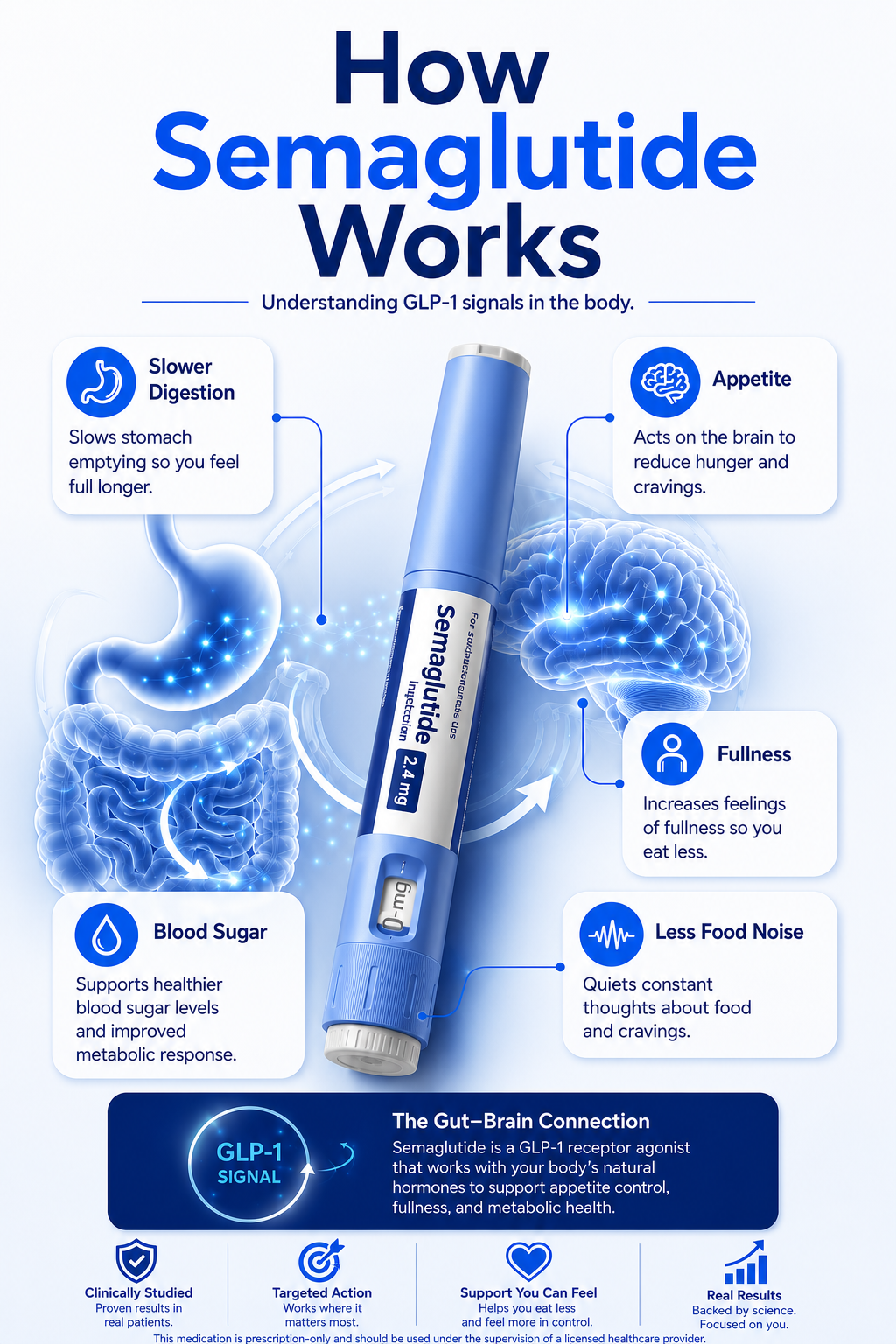
Direct Answer
How Does Semaglutide Work?
Semaglutide works like a GLP-1 receptor agonist, which means it activates GLP-1 pathways that help regulate appetite, fullness, digestion, insulin release, and glucagon signals.
The Simple Explanation
Semaglutide acts like a body signal that usually rises after eating. That signal helps tell the brain, stomach, pancreas, and liver that food has arrived.
Because semaglutide lasts longer than the body’s natural GLP-1 signal, it can keep fullness and appetite signals active longer for many patients.
What Patients Often Notice
Many patients notice smaller appetite, earlier fullness, fewer cravings, or less food noise. Also, some patients notice digestive side effects because food may leave the stomach more slowly.
Therefore, semaglutide education should include nutrition, protein, hydration, side effects, provider follow-up, and long-term maintenance.
Plain-Language Mechanism
Semaglutide Works Through A Gut-Brain-Blood Sugar Signal
Semaglutide works because GLP-1 is not just one signal. It connects the gut, brain, stomach, pancreas, liver, appetite, digestion, and blood sugar response.
Step 1: Food Enters The Gut
First, when you eat, your gut releases hormone signals. These signals help the body respond to food.
One of those signals is GLP-1. It tells several body systems that nutrients have arrived and that the body should prepare to manage them.
Step 2: Semaglutide Copies The GLP-1 Signal
Next, semaglutide activates GLP-1 receptors. A receptor works like a receiver on a cell. When the signal reaches the receiver, the cell responds.
Because semaglutide stays active longer than natural GLP-1, the fullness and blood sugar response may last longer.
Step 3: The Brain Gets Stronger Fullness Messages
Then, GLP-1 pathways help the brain receive stronger appetite and fullness signals. As a result, some patients feel less hunger or feel satisfied with less food.
This helps explain why many patients say, “I get full faster,” or “I am not thinking about food all day.”
Step 4: The Stomach Empties More Slowly
Also, semaglutide can slow how quickly food leaves the stomach. This may help fullness last longer after a meal.
However, this same effect can also explain nausea, reflux, burping, bloating, constipation, or feeling too full after larger meals.
Step 5: The Pancreas Responds To Blood Sugar
When blood sugar rises after eating, GLP-1 signaling helps the pancreas release insulin. Insulin helps move sugar from the blood into cells.
Therefore, semaglutide can help coordinate the body’s response after meals.
Step 6: The Liver Receives A Different Signal
GLP-1 signaling can also reduce extra glucagon signals when the body does not need more sugar released into the blood.
Glucagon tells the liver to release stored sugar. So, balancing insulin and glucagon signals helps explain semaglutide’s role in blood sugar education.
Quick Facts
How Semaglutide Works At A Glance
This table gives you a simple overview of semaglutide’s main body effects before the guide goes deeper.
Semaglutide Mechanism Table
| Body System | What Semaglutide May Affect | What Patients May Notice |
|---|---|---|
| Brain | Appetite and fullness signaling. | Less hunger, earlier fullness, fewer food thoughts for some patients. |
| Stomach | How fast food leaves the stomach. | Longer fullness, smaller meals, nausea, reflux, or bloating for some patients. |
| Pancreas | Insulin release when blood sugar rises after meals. | Better understanding of why semaglutide connects to blood sugar care. |
| Liver | Glucagon-related sugar release signals. | More context for blood sugar balance after eating. |
| Gut | Digestive signaling and movement. | Changes in bowel habits, fullness, nausea, constipation, or diarrhea. |
| Behavior | Eating patterns through lower hunger and food noise. | More room to plan protein, meals, fluids, and habits. |
GLP-1 Receptors
What Does “GLP-1 Receptor Agonist” Mean?
A GLP-1 receptor agonist is a medicine that activates GLP-1 receptors, which are signal receivers involved in appetite, digestion, insulin response, and blood sugar regulation.
Receptors Are Like Receivers
First, a receptor is like a receiver on a cell. When the right signal connects to it, the cell changes what it does.
GLP-1 Is The Signal
Next, GLP-1 is a natural hormone signal that the body uses after eating. It helps coordinate appetite, digestion, and blood sugar response.
Semaglutide Activates The Pathway
Also, semaglutide activates GLP-1 receptors. This is why it belongs to the GLP-1 receptor agonist medication class.
The Signal Lasts Longer
Finally, semaglutide is designed to last longer than natural GLP-1. Therefore, its effects can continue between meals and across the week.
Key Terms Made Simple
- GLP-1: A natural body signal
- Receptor: A receiver on a cell
- Agonist: Something that activates a receptor
- Semaglutide: A medicine that activates GLP-1 receptors
- Incretin: A gut hormone signal involved in meal response
- Satiety: The feeling of fullness after eating
Appetite
How Semaglutide Affects Hunger And Fullness
Semaglutide can affect appetite because GLP-1 pathways help the brain receive fullness signals and respond differently to food cues.
Hunger May Feel Lower
First, some patients feel less physical hunger. This can make smaller portions feel more satisfying.
Fullness May Come Earlier
Next, patients may feel full sooner during meals. Therefore, eating past fullness may trigger discomfort.
Cravings May Change
Also, some patients notice fewer cravings or less urgency around food. However, this response varies.
Food Noise May Quiet Down
Because appetite and reward signals can change, food thoughts may feel less constant for some people.
Structure Still Matters
However, lower appetite can make patients skip protein, fluids, or meals. So, nutrition planning still matters.
Habits Still Matter
Finally, medication can create room for change, but daily habits support long-term results.
Appetite Changes Table
| What Changes | Why It May Happen | Patient-Friendly Response |
|---|---|---|
| Less hunger | GLP-1 pathways affect appetite signaling. | Plan protein even when hunger feels low. |
| Earlier fullness | Fullness signals may feel stronger. | Eat slowly and stop at comfortable fullness. |
| Less food noise | Food-related thoughts may feel quieter for some patients. | Use the calmer space to build meal structure. |
| Lower meal size | Smaller portions may feel satisfying. | Choose nutrient-dense foods first. |
| Skipped meals | Low hunger may reduce eating reminders. | Create a simple meal rhythm. |
Digestion
How Semaglutide Affects The Stomach And Digestion
Semaglutide can slow stomach emptying, which means food may stay in the stomach longer before moving into the small intestine.
Slower Emptying Can Help Fullness
First, when food leaves the stomach more slowly, fullness may last longer. This can help some patients eat less without feeling as hungry.
The Same Effect Can Cause Symptoms
Next, slower stomach emptying can also cause nausea, burping, reflux, bloating, or heavy fullness for some patients.
Meal Size Becomes Important
Also, large meals may feel harder during treatment. Therefore, smaller meals may feel more comfortable.
Food Tolerance Can Change
Finally, greasy, fried, very rich, or very large meals may feel different than they did before treatment.
Digestion Support Checklist
- Eat smaller portions
- Slow down while eating
- Stop at early fullness
- Watch greasy or very rich meals
- Sip fluids steadily
- Track nausea, reflux, and constipation
- Contact a provider if symptoms persist
Blood Sugar
How Semaglutide Affects Insulin And Glucagon
Semaglutide helps coordinate blood sugar signals after eating by supporting insulin release when blood sugar rises and reducing extra glucagon signals when they are not needed.
Insulin Helps Move Sugar Into Cells
First, after you eat, carbohydrates break down into sugar that enters the blood. The body then needs insulin to help move sugar into cells.
GLP-1 signaling helps the pancreas release insulin when blood sugar rises. This is one reason semaglutide connects to type 2 diabetes care.
Glucagon Tells The Liver To Release Sugar
Next, glucagon tells the liver to release stored sugar. This can help when the body needs energy.
However, after eating, extra sugar release may not be needed. GLP-1 signaling can help reduce that extra glucagon signal.
Blood Sugar Signal Table
| Signal | Simple Meaning | How Semaglutide Fits |
|---|---|---|
| Insulin | Helps move sugar from blood into cells. | GLP-1 signaling helps insulin release when blood sugar rises after eating. |
| Glucagon | Tells the liver to release stored sugar. | GLP-1 signaling can reduce extra glucagon signals when not needed. |
| Blood sugar | The amount of sugar in the blood. | Semaglutide helps explain meal-related blood sugar response. |
| Pancreas | An organ that helps manage insulin and glucagon. | Semaglutide acts partly through pancreas-related signaling. |
| Liver | An organ that stores and releases sugar. | Semaglutide helps explain why liver sugar release matters. |
Food Noise
Why Semaglutide May Reduce Food Noise
Semaglutide may reduce food noise for some patients because appetite, fullness, and food reward signals can change during treatment.
Food Noise Means Repeated Food Thoughts
First, food noise can feel like constant thinking about food, cravings, snacking, or the next meal.
Semaglutide May Quiet The Signal
Next, when appetite and fullness signals change, food thoughts may become less intense for some patients.
This Can Create Space For Better Choices
Also, lower food noise may help patients pause, plan meals, choose protein, and stop eating earlier.
Lower Food Noise Is Not The Whole Plan
Finally, patients still need nutrition structure. Protein, hydration, fiber, and enough total intake remain important.
Food Noise Clues
- Thinking about food often
- Feeling pulled toward snacks
- Planning the next meal early
- Feeling distracted by cravings
- Feeling less urgent around food during treatment
- Feeling more able to pause before eating
Timeline
When Do Patients Notice Semaglutide Working?
Some patients notice appetite changes early, while weight, digestion, side effects, and habit changes may unfold over weeks or months.
Semaglutide Response Timeline
| Timeframe | What Some Patients May Notice | What To Focus On |
|---|---|---|
| First days to weeks | Appetite changes, earlier fullness, nausea, or food tolerance changes. | Smaller meals, hydration, symptom tracking, and provider guidance. |
| First month | Food noise changes, lower meal size, constipation or reflux for some patients. | Protein, fluids, fiber as tolerated, and bowel habit awareness. |
| Dose adjustment periods | Side effects may change or appetite may shift again. | Do not force meals. Track symptoms and discuss concerns. |
| Several months | Weight, energy, habits, and body composition changes may become clearer. | Muscle support, strength activity, nutrition, and follow-up. |
| Long-term care | Maintenance planning becomes more important. | Build repeatable habits and discuss long-term strategy with a provider. |
Side Effects
Why Semaglutide Side Effects Match How It Works
Many semaglutide side effects make sense because the medication affects appetite, stomach emptying, digestion, fluids, and food intake.
Mechanism And Side Effect Table
| How Semaglutide Works | Possible Patient Experience | Why It Matters |
|---|---|---|
| Slows stomach emptying | Nausea, reflux, burping, bloating, or heavy fullness. | Meal size and eating speed may matter more. |
| Reduces appetite | Skipped meals or low food intake. | Protein and nutrient intake may drop too low. |
| Changes meal size | Eating much less than usual. | Patients need a plan for protein, fluids, and fiber. |
| Changes gut patterns | Constipation or diarrhea for some patients. | Bowel habits should be tracked and discussed if symptoms continue. |
| Reduces food noise | Food feels less urgent. | This can help habits, but it can also lead to under-eating without structure. |
Nutrition
Why Nutrition Matters If Semaglutide Lowers Appetite
Semaglutide can make eating less feel easier, but patients still need protein, fluids, fiber, vitamins, minerals, and enough total intake.
Protein Comes First
First, protein helps support lean muscle, fullness, strength, and recovery. Because appetite may drop, protein needs planning.
Hydration Supports Digestion
Next, fluids support bowel function, energy, and safety. This matters when constipation, nausea, vomiting, or diarrhea appears.
Fiber Needs Tolerance
Also, fiber may support bowel regularity. However, adding too much too fast can worsen gas or bloating.
Smaller Meals May Work Better
Finally, smaller nutrient-dense meals may feel better than large meals during semaglutide treatment.
Semaglutide Nutrition Priorities
- Protein at meals when tolerated
- Steady fluids throughout the day
- Fiber added slowly
- Smaller meals if fullness comes quickly
- Backup foods for low appetite days
- Provider guidance for ongoing symptoms
Muscle And Body Composition
Why Semaglutide Results Should Not Focus Only On The Scale
Because weight loss can include fat, water, and lean mass, semaglutide success should include muscle support, nutrition, strength, and long-term maintenance.
Weight Loss Is Not Always Fat Loss Only
First, the scale cannot show whether weight changes come from fat, muscle, water, or digestion changes.
Muscle Supports Metabolic Health
Next, muscle supports strength, movement, glucose use, function, and long-term health.
Protein Helps Protect Lean Mass
Also, protein becomes more important when appetite drops. Without a plan, patients may eat too little.
Strength Activity Matters
Finally, strength-focused activity can support body composition when appropriate for the patient’s health status.
Better Progress Markers
- Strength
- Energy
- Waist changes
- Protein consistency
- Hydration habits
- Side effect control
- Lab trends when available
- Maintenance skills
Semaglutide Vs Tirzepatide
How Is Semaglutide Different From Tirzepatide?
Semaglutide works through GLP-1 receptor pathways, while tirzepatide works through GLP-1 and GIP-related pathways.
Mechanism Comparison Table
| Topic | Semaglutide | Tirzepatide |
|---|---|---|
| Primary pathway education | GLP-1 receptor pathway. | GLP-1 and GIP-related pathways. |
| Common brand-name examples | Ozempic and Wegovy. | Mounjaro and Zepbound. |
| Shared patient topics | Appetite, fullness, side effects, nutrition, and maintenance. | Appetite, fullness, side effects, nutrition, and maintenance. |
| Why patients compare them | Patients want to understand results, side effects, access, and fit. | Patients want to understand dual-pathway science, results, side effects, access, and fit. |
| Best next page | Semaglutide Guide | Tirzepatide Guide |
Mechanism Does Not Pick The Medication Alone
First, mechanism matters, but it is not the whole decision. A provider should also review health history, goals, side effects, cost, access, and safety.
Comparison Should Help You Ask Better Questions
Next, a good comparison should reduce confusion. It should not pressure patients to chase the newest or most talked-about medication.
Common Mistakes
Common Mistakes When Patients Think About How Semaglutide Works
Semaglutide can feel easier to understand when patients avoid common myths about hunger, metabolism, side effects, and long-term results.
Myth And Better Understanding Table
| Common Misunderstanding | Better Understanding | Why It Matters |
|---|---|---|
| Semaglutide burns fat directly. | Semaglutide mainly changes appetite, fullness, digestion, and blood sugar signals. | Patients understand why nutrition and habits still matter. |
| Lower hunger means I can skip nutrition. | Low appetite can make protein, fluids, and nutrients harder to get. | Patients protect energy, muscle, and digestion. |
| Nausea means the medication is working better. | Nausea can happen because digestion changes, but severe symptoms are not the goal. | Patients know when to ask for help. |
| The scale tells the whole story. | Weight change does not show muscle, water, strength, labs, or health habits. | Patients track better progress markers. |
| Medication replaces lifestyle change. | Medication changes signals, but habits support long-term results. | Patients plan for maintenance from the start. |
| Online advice is enough. | Personal decisions require health history, labs, symptoms, and provider guidance. | Patients stay safer and more informed. |
Provider-Guided Care
Why Provider Guidance Matters When Using Semaglutide
Semaglutide affects multiple body systems, so provider guidance helps connect the medication to safety, side effects, nutrition, labs, and long-term goals.
A Provider Reviews Medical Fit
First, semaglutide may not fit every person. A provider should review medical history, current medicines, symptoms, risk factors, and goals.
A Provider Helps Manage Side Effects
Next, nausea, constipation, reflux, diarrhea, vomiting, dehydration, or fatigue may need support.
A Provider Helps Protect Nutrition
Also, low appetite can reduce protein, fluids, fiber, and total intake. A provider can help identify when nutrition needs closer support.
A Provider Helps Plan Long-Term Care
Finally, long-term success includes maintenance, body composition, follow-up, and realistic habits.
Questions To Ask About Semaglutide
- How does semaglutide fit my health history?
- What side effects should I watch?
- How should I eat if my appetite drops?
- How much protein should I aim for?
- What symptoms need medical attention?
- How do I protect muscle?
- What does follow-up look like?
Trusted Medical Sources
Helpful Sources If You Want To Keep Learning
RealGLP.Life explains semaglutide in plain language. These trusted health sources can help you keep learning from medical and government organizations.
FDA Wegovy Prescribing Information
The FDA label gives official prescribing information for Wegovy, including semaglutide’s drug class, warnings, dosage information, and safety topics.
MedlinePlus Semaglutide Injection
MedlinePlus provides patient-friendly semaglutide injection information from the National Library of Medicine, including safety notes and common side effects.
NIDDK Weight-Management Medicines
The National Institute of Diabetes and Digestive and Kidney Diseases explains prescription weight-management medicines and how some treatments can help people feel less hungry or full sooner.
FDA Safety Information About GLP-1 Drugs
The FDA shares safety information about unapproved GLP-1 drugs used for weight loss. This helps patients understand why medication source and quality matter.
Learning Path
What To Read Next About Semaglutide
Now that you understand how semaglutide works, the next step is learning how that science connects to nutrition, side effects, results, and maintenance.
Semaglutide Guide
First, return to the full semaglutide guide for the complete overview.
Semaglutide Nutrition
Next, learn how protein, hydration, fiber, and smaller meals support treatment.
Semaglutide Side Effects
Also, learn why nausea, constipation, reflux, and fatigue may happen.
Semaglutide Results Timeline
Then, learn what may change in the first weeks, months, and long-term journey.
GLP Science
However, science may help if you want a broader look at GLP-1, GIP, appetite, and metabolism.
Semaglutide Vs Tirzepatide
Finally, compare semaglutide with tirzepatide in a balanced, provider-guided way.
Expert Tip
Angela Jayes, NP On How Semaglutide Works
Understand The Signal Before You Judge The Result
Semaglutide changes body signals. When patients understand those signals, they can better understand appetite, fullness, side effects, nutrition needs, and long-term support.
Do Not Let Low Appetite Replace A Plan
Also, lower hunger can help, but it can also make patients miss protein, fluids, and fiber. A simple nutrition plan matters from the beginning.
Watch Symptoms Early
Finally, nausea, constipation, reflux, vomiting, or dehydration signs deserve attention. Side effects are information, not something to ignore.
FAQ
Common Questions About How Semaglutide Works
These answers help patients understand semaglutide’s mechanism before reading deeper guides about side effects, nutrition, and results.
How does semaglutide work in simple terms?
Semaglutide copies a natural GLP-1 signal that helps the body manage appetite, fullness, digestion, insulin response, glucagon signals, and blood sugar after eating.
Does semaglutide burn fat directly?
No. Semaglutide mainly works by changing appetite, fullness, digestion, and blood sugar signals. Weight loss may happen when those changes help reduce intake over time.
Why do I feel full faster on semaglutide?
Semaglutide can strengthen fullness signals and slow stomach emptying. As a result, some patients feel satisfied with smaller meals.
Why can semaglutide cause nausea?
Nausea may happen because semaglutide can slow stomach emptying and make large or heavy meals harder to tolerate.
How does semaglutide affect blood sugar?
Semaglutide helps the pancreas release insulin when blood sugar rises after eating and can reduce extra glucagon signaling when the body does not need more sugar released.
Does semaglutide replace diet and exercise?
No. Semaglutide changes body signals, but nutrition, protein, hydration, physical activity, side effect support, and provider follow-up still matter.
Educational Use Only
This Semaglutide Guide Does Not Replace Medical Care
Education Helps You Understand Treatment
RealGLP.Life provides educational content only. It does not provide medical advice, diagnosis, or treatment.
Your Provider Guides Personal Decisions
Because semaglutide decisions depend on health history, medications, labs, symptoms, goals, side effects, and risk factors, speak with a qualified healthcare provider for personal guidance.
Urgent Symptoms Need Prompt Care
If you have severe belly pain, repeated vomiting, dehydration signs, chest pain, shortness of breath, fainting, confusion, or signs of a medical emergency, seek medical care right away.
Ready To Understand Whether Semaglutide Fits Your Goals?
Start with clear education. Then, when you need personal guidance, speak with a qualified provider who can connect semaglutide science to your health history.