Tirzepatide Side Effects
Understand Tirzepatide Side Effects And What They May Mean
Tirzepatide side effects often involve the stomach, gut, appetite, bowel habits, hydration, and energy because tirzepatide works through GIP and GLP-1 pathways that affect fullness, digestion, and meal response.
First, tirzepatide can help some patients feel less hungry, feel full sooner, and think about food less often. However, those same changes can also affect nausea, constipation, reflux, diarrhea, burping, bloating, vomiting, or fatigue.
Therefore, side effects should guide better care, not fear. This guide explains common symptoms, why they may happen, what may help, and when to contact a qualified healthcare provider.
Direct Answer
What Are Tirzepatide Side Effects?
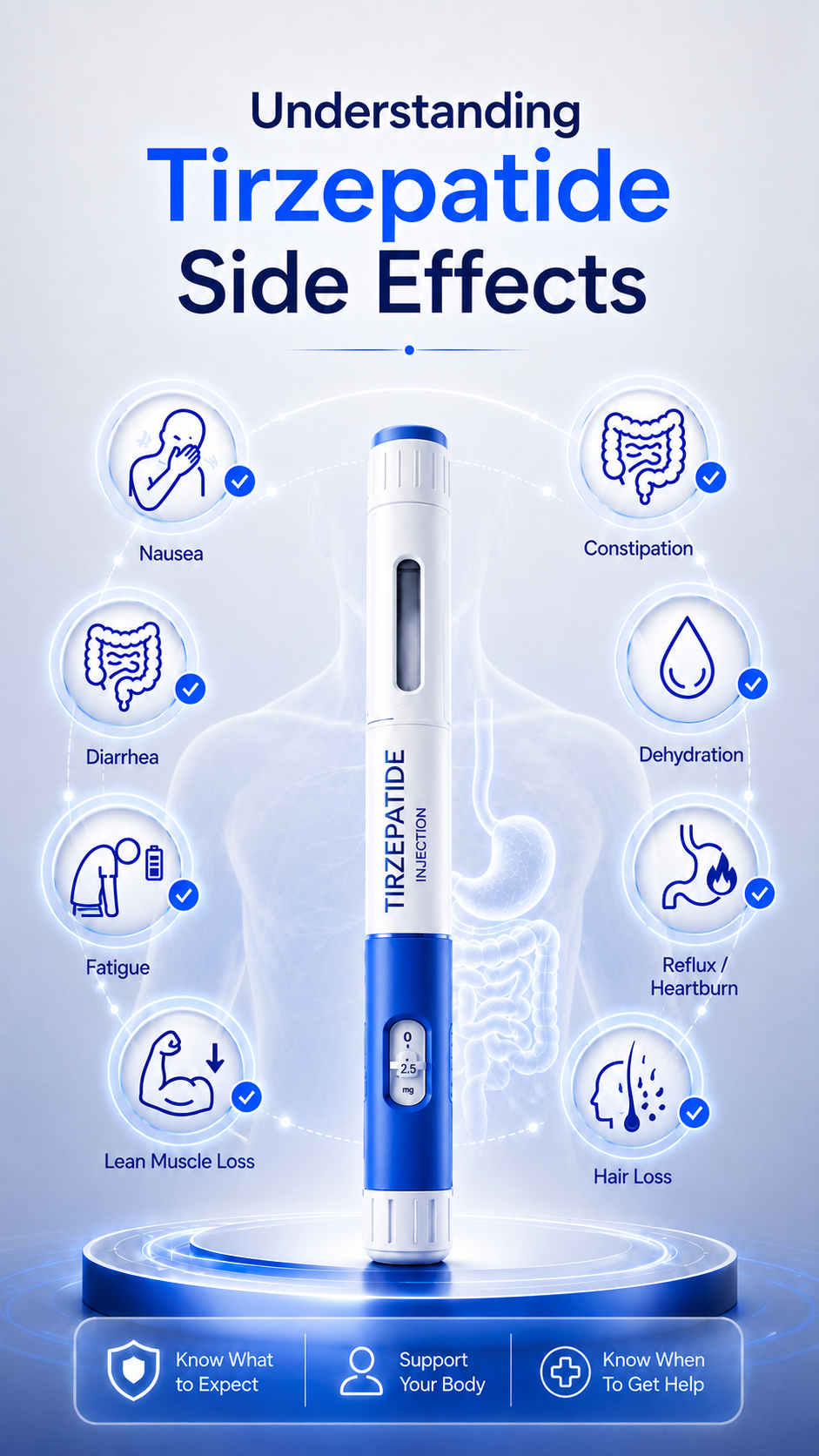
Tirzepatide side effects are symptoms that may happen while taking tirzepatide, especially symptoms linked to digestion, appetite, bowel changes, food tolerance, hydration, and energy.
The Simple Explanation
Tirzepatide activates two incretin pathways called GIP and GLP-1. These signals help the body respond after eating.
Because these pathways affect appetite, fullness, stomach emptying, insulin response, glucagon signals, and gut rhythm, many side effects show up in the stomach and digestive system.
The Main Patient Takeaway
Many side effects feel mild, temporary, or manageable with smaller meals, steady fluids, symptom tracking, and provider-guided support.
However, severe symptoms need attention. So, patients should know which symptoms can wait for follow-up and which symptoms need prompt care.
Why They Happen
Why Tirzepatide Side Effects Often Start In The Gut
Tirzepatide side effects often start in the gut because tirzepatide can change appetite, fullness, stomach emptying, food intake, bowel rhythm, and hydration habits.
Food May Stay In The Stomach Longer
First, tirzepatide can slow stomach emptying. This means food may leave the stomach more slowly.
As a result, fullness may last longer. However, large meals may feel heavier and may trigger nausea, reflux, burping, bloating, or discomfort.
Appetite May Drop
Next, tirzepatide may lower appetite. This can help some patients eat less without constant hunger.
However, low appetite can also lead to skipped meals, low protein, low fluids, low fiber, and fatigue if patients do not plan ahead.
Bowel Habits May Change
Also, bowel habits may shift when food intake, fluids, fiber, movement, and gut rhythm change.
Therefore, constipation or diarrhea can happen. Patients should track patterns instead of guessing.
Dose Changes Can Shift Symptoms
Finally, symptoms may appear when treatment starts or when the dose changes.
Because each person responds differently, follow-up helps connect dose, side effects, meals, fluids, and safety.
Quick Reference
Tirzepatide Side Effects At A Glance
This table gives a simple overview of common tirzepatide side effects, why they may happen, and what patients should watch.
Side Effect Quick Reference Table
| Side Effect | Why It May Happen | What To Watch |
|---|---|---|
| Nausea | Slower stomach emptying, large meals, rich foods, fast eating, or dose changes. | How often it happens, whether it improves, and whether fluids stay down. |
| Constipation | Lower food intake, lower fluids, slower gut rhythm, low fiber, or less movement. | Pain, bloating, several days without relief, or vomiting. |
| Diarrhea | Gut adjustment, food tolerance changes, dose changes, or unrelated illness. | Fluid loss, dizziness, weakness, or symptoms that continue. |
| Reflux or heartburn | Fullness, slower stomach emptying, late meals, trigger foods, or large portions. | Chest burning, sour taste, burping, nighttime symptoms, or pain. |
| Vomiting | Severe nausea, food intolerance, dose changes, illness, or another medical issue. | Repeated vomiting, dehydration signs, or inability to keep fluids down. |
| Fatigue | Low intake, low protein, dehydration, poor sleep, or body adjustment. | Weakness, dizziness, very low intake, or fatigue that limits daily life. |
| Abdominal pain | Gas, constipation, reflux, digestive changes, or another medical concern. | Severe, sharp, worsening, or persistent belly pain. |
| Injection site reaction | Skin irritation where the injection goes in. | Redness, swelling, pain, warmth, drainage, or worsening irritation. |
Nausea
Why Tirzepatide Can Cause Nausea
Nausea can happen on tirzepatide because fullness signals may feel stronger, food may leave the stomach more slowly, and large meals may become harder to tolerate.
Fullness Can Feel Stronger
First, tirzepatide can make fullness arrive sooner. If a patient keeps eating past early fullness, the stomach may feel upset.
Large Meals May Feel Heavy
Next, meals that felt normal before treatment may feel too large during treatment. Therefore, smaller meals may help.
Rich Foods May Worsen Symptoms
Also, greasy, fried, or very rich foods may feel heavier for some patients. However, tolerance varies.
Ongoing Nausea Needs Support
Finally, nausea that limits food, fluids, work, sleep, or daily function should be discussed with a provider.
Nausea Support Checklist
- Eat smaller portions
- Eat slowly
- Stop at early fullness
- Avoid forcing meals
- Use lighter foods during symptom flares
- Sip fluids slowly
- Track dose timing and meal timing
- Contact a provider if nausea persists
Constipation
Why Constipation Can Happen On Tirzepatide
Constipation may happen when tirzepatide changes appetite, meal size, fluid intake, fiber intake, gut rhythm, or movement habits.
Less Food Can Mean Less Stool
First, when patients eat less, the body may make less stool. This can change bowel rhythm.
Low Fluids Can Make Stool Harder
Next, low fluid intake can make constipation worse. Because appetite and thirst may change, hydration needs attention.
Fiber Can Help, But Timing Matters
Also, fiber may help some patients. However, adding too much too fast can worsen gas, bloating, or discomfort.
Pain Or Vomiting Needs Help
Finally, constipation with severe pain, vomiting, major bloating, or no relief needs medical guidance.
Constipation Support Checklist
- Sip fluids throughout the day
- Add fiber slowly when tolerated
- Use gentle movement when appropriate
- Track bowel frequency
- Review protein and meal rhythm
- Ask before using laxatives often
- Contact a provider for severe or lasting symptoms
Diarrhea
Why Diarrhea May Happen On Tirzepatide
Diarrhea may happen as the gut adjusts to tirzepatide, after dose changes, with food tolerance changes, or from an illness unrelated to medication.
Gut Rhythm Can Shift
First, tirzepatide changes meal-response signaling. As a result, some patients may notice looser stools.
Food Triggers May Become More Noticeable
Next, very greasy, very sweet, or very large meals may worsen symptoms for some patients.
Fluids Matter More
Also, diarrhea can reduce fluids. Therefore, dizziness, weakness, dry mouth, dark urine, or little urination should get attention.
Ongoing Diarrhea Needs Review
Finally, diarrhea that continues, worsens, or causes dehydration concerns should be reviewed by a provider.
Diarrhea Support Checklist
- Focus on fluids
- Use gentle foods when needed
- Track food triggers
- Watch for dehydration signs
- Avoid very large meals
- Contact a provider if symptoms continue
Reflux And Burping
Why Tirzepatide Can Cause Reflux, Heartburn, Or Burping
Reflux, heartburn, and burping may happen when food stays in the stomach longer, meals are too large, or trigger foods increase stomach pressure.
Fullness Can Increase Pressure
First, slower stomach emptying may make fullness last longer. If a meal feels too large, pressure may increase.
Late Meals May Feel Worse
Next, lying down soon after a large meal may worsen reflux for some patients.
Triggers Vary By Person
Also, spicy foods, greasy foods, acidic foods, caffeine, carbonated drinks, or large portions may bother some people.
Chest Pain Needs Urgent Care
Finally, chest pain, shortness of breath, fainting, or severe symptoms need urgent medical attention.
Reflux Support Checklist
- Use smaller meals
- Eat slowly
- Avoid lying down right after eating
- Track trigger foods
- Watch nighttime symptoms
- Get urgent help for chest pain or severe symptoms
Vomiting And Dehydration
When Vomiting Or Dehydration Becomes More Serious
Vomiting and dehydration matter because they can quickly reduce fluids, electrolytes, energy, and safety during tirzepatide treatment.
Vomiting Raises Bigger Concerns
First, nausea may feel uncomfortable. However, repeated vomiting can quickly become unsafe.
Fluids Are The First Concern
Next, pay attention to whether fluids stay down. If they do not, medical guidance matters.
Dehydration Has Warning Signs
Also, dizziness, dark urine, dry mouth, weakness, confusion, or little urination may suggest dehydration.
Severe Symptoms Need Prompt Care
Finally, repeated vomiting, severe belly pain, fainting, confusion, or inability to keep fluids down should prompt urgent medical attention.
Warning Signs To Take Seriously
- Repeated vomiting
- Fluids will not stay down
- Severe or worsening belly pain
- Fainting or confusion
- Very dark urine or little urination
- Severe weakness
- Chest pain or shortness of breath
Other Symptoms
Other Tirzepatide Side Effects Patients May Ask About
Some patients also ask about fatigue, abdominal pain, injection site reactions, appetite loss, burping, hair changes, and allergic-type symptoms.
Fatigue
Fatigue may connect to lower food intake, lower protein, low fluids, poor sleep, side effects, or body adjustment.
Therefore, patients should review meals, hydration, sleep, and symptoms if energy drops.
Abdominal Pain
Abdominal pain may come from gas, constipation, reflux, digestive changes, or another medical concern.
However, severe, sharp, worsening, or persistent belly pain needs medical review.
Injection Site Reactions
Some patients may notice redness, swelling, itching, or pain near the injection site.
Also, worsening redness, warmth, drainage, spreading irritation, or severe swelling should be discussed with a provider.
Very Low Appetite
Lower appetite may help some patients eat less. However, very low appetite can make protein, fluids, and nutrients too low.
So, patients should ask for help if they cannot eat enough or feel weak.
Burping Or Bloating
Burping and bloating may happen when food sits longer or meal size feels too large.
Smaller meals, slower eating, and trigger tracking may help some patients.
Allergic-Type Symptoms
Rash, swelling, trouble breathing, or severe allergic-type symptoms need urgent medical attention.
Because allergic reactions can be serious, patients should not wait if breathing or facial swelling occurs.
Warning Signs
When Should You Contact A Provider About Tirzepatide Side Effects?
Contact a provider when tirzepatide side effects feel severe, last too long, limit food or fluids, cause dehydration concerns, or feel unusual for your body.
Provider Guidance Table
| Symptom Pattern | Why It Matters | Best Next Step |
|---|---|---|
| Mild nausea that improves | The body may adjust, especially early in treatment. | Track meals, portions, fluids, and dose timing. |
| Nausea that prevents eating or drinking | Low intake and dehydration risk may increase. | Contact your provider. |
| Repeated vomiting | Fluid loss can become unsafe. | Seek prompt medical guidance. |
| Severe belly pain | Severe pain can signal a more serious issue. | Seek urgent medical care. |
| Constipation with severe pain or vomiting | This pattern needs medical review. | Contact a provider promptly. |
| Dizziness, confusion, or little urination | These signs may suggest dehydration or another concern. | Seek medical guidance right away. |
| Chest pain, trouble breathing, or facial swelling | These symptoms may signal an emergency. | Seek emergency care. |
Do Not Treat Severe Symptoms As Normal
First, side effects do not prove the medication is “working better.” Severe symptoms need support, not praise.
Bring Details To Follow-Up
Next, track symptom timing, dose timing, meals, fluids, bowel changes, and severity. These details help your provider guide the next step.
Dose Changes
Why Side Effects May Change When The Dose Changes
Tirzepatide side effects may appear or increase when treatment starts or when the dose changes because the body has to adjust to stronger GIP and GLP-1 signaling.
Starting Treatment
First, early treatment may bring appetite changes, nausea, fullness, reflux, constipation, or fatigue.
Increasing The Dose
Next, a dose increase may make fullness, appetite changes, or digestive symptoms stronger for some patients.
Eating The Same Portions
Also, meals that worked before may feel too large after treatment starts. Therefore, portion changes may help.
Hydration Gaps
Because appetite and thirst may drop, hydration needs attention during early treatment and after dose changes.
Provider Adjustments
However, patients should not adjust medication alone. Providers can guide dose timing, symptom support, and safety decisions.
Long-Term Patterns
Finally, some symptoms improve with time. But symptoms that stay severe need review.
Food And Fluids
Nutrition And Hydration Can Help Many Tirzepatide Side Effects
Food and fluid habits cannot solve every side effect, but they can help many patients manage common digestive symptoms and avoid low intake.
Smaller Meals May Feel Better
First, large meals may worsen nausea, fullness, reflux, burping, or bloating. Smaller meals can feel more comfortable.
Protein Still Matters
Next, low appetite can reduce protein intake. Therefore, patients should plan simple protein foods they can tolerate.
Gentle Foods Can Help During Flares
Also, during symptom flares, some patients do better with simple foods, smaller portions, and slower eating.
Hydration Supports Digestion
First, fluids support bowel function, energy, and overall safety. This matters when constipation, diarrhea, vomiting, or low appetite appears.
Sipping May Work Better
Next, large drinks with meals may worsen fullness for some patients. Sipping between meals may feel easier.
Low Fluids Need Attention
Finally, dizziness, dry mouth, little urination, or weakness should prompt medical guidance.
Side Effect Food Strategy Table
| When You Feel | Try This First | Watch For |
|---|---|---|
| Nauseated | Small portions, slower eating, lighter foods, and small sips. | Vomiting, dehydration signs, or symptoms that do not improve. |
| Too full | Stop earlier, save food for later, and avoid forcing meals. | Reflux, pain, or inability to eat enough. |
| Constipated | Fluids, gentle movement, fiber as tolerated, and provider advice. | Pain, vomiting, or several days without relief. |
| Low energy | Review protein, fluids, meal rhythm, and sleep. | Severe weakness, dizziness, or very low intake. |
Exercise And Symptoms
How Side Effects Can Affect Exercise On Tirzepatide
Tirzepatide side effects can change exercise tolerance, especially when nausea, low intake, dehydration, reflux, constipation, diarrhea, or fatigue appears.
Use Gentle Movement During Mild Symptoms
First, light walking or mobility may feel better than hard workouts when symptoms are mild.
Avoid Hard Workouts During Strong Symptoms
Next, repeated vomiting, diarrhea, dehydration signs, dizziness, or severe fatigue are reasons to pause hard exercise and seek guidance.
Reflux Can Change Timing
Also, lying down or bending right after meals may worsen reflux for some patients.
Protein And Fluids Support Recovery
Finally, movement works best when patients also support protein, hydration, rest, and symptom care.
Exercise Adjustment Checklist
- Choose walking during mild nausea
- Avoid intense workouts if fluids are low
- Pause hard exercise with vomiting or diarrhea
- Avoid lying flat after large meals
- Use gentle mobility on fatigue days
- Stop for chest pain, fainting, or severe shortness of breath
Medication Source
Why Medication Source And Instructions Matter
Medication quality, dose instructions, and source matter because unsafe products or unclear directions can increase risk.
Use Provider-Guided Care
First, tirzepatide should come with clear medical guidance, dose instructions, side effect support, and follow-up.
Also, patients should understand how and when to seek help if symptoms appear.
Avoid Guesswork With Dose Or Source
Next, medication source and dosing instructions matter. The FDA has shared safety concerns about unapproved GLP-1 drugs used for weight loss.
Therefore, patients should use trusted clinical guidance and avoid self-directed treatment from unsafe or unclear sources.
Common Mistakes
Common Mistakes That Can Make Tirzepatide Side Effects Worse
Some tirzepatide side effects feel worse when patients eat too much at once, drink too little, skip protein, ignore constipation, or wait too long to ask for help.
Mistake And Better Step Table
| Common Mistake | Why It Can Backfire | Better Step |
|---|---|---|
| Eating the same large portions | Large meals may worsen nausea, fullness, reflux, or bloating. | Try smaller portions and stop at early fullness. |
| Skipping fluids | Low fluids can worsen constipation, fatigue, and dehydration risk. | Sip fluids throughout the day. |
| Ignoring protein | Low intake can reduce muscle support and energy. | Plan easy protein options when appetite is low. |
| Adding too much fiber at once | Sudden fiber increases may worsen gas or bloating. | Add fiber gradually and track tolerance. |
| Waiting too long to report symptoms | Severe symptoms can lead to dehydration or poor intake. | Contact a provider when symptoms limit food, fluids, or daily life. |
| Changing medication alone | Unsupervised changes may create safety concerns. | Ask your provider before changing dose or schedule. |
Provider-Guided Support
Side Effects Should Guide Better Care, Not Shame
Side effects give useful information. A provider can help connect symptoms to dose timing, food intake, hydration, medication tolerance, and medical history.
Symptoms Help Providers Understand Your Pattern
First, side effects tell a story. Your provider may ask when the symptom started, what dose you use, what you ate, how much you drank, and how severe it feels.
Side Effects Do Not Mean Failure
Next, symptoms do not mean you did something wrong. They mean your body needs attention, support, and sometimes a care plan adjustment.
Provider Guidance Matters Most With Strong Symptoms
Finally, persistent nausea, vomiting, dehydration signs, severe belly pain, chest pain, breathing trouble, or symptoms that limit eating and drinking need medical review.
Recrea Health & Wellness
Recrea Health & Wellness is the licensed medical organization behind RealGLP.Life and can provide provider-guided support when appropriate.
Contact Recrea
- Call: 330-952-0391
- Email: info@recreahealth.com
- Visit: 2425 Medina RD Suite 101, Medina, OH 44256
Helpful Medical Sources
Keep Learning From Trusted Health Sources
RealGLP.Life explains tirzepatide side effects in plain language. These medical and government sources can help you keep learning from trusted organizations.
FDA Zepbound Prescribing Information
The FDA label gives official prescribing information for Zepbound, including tirzepatide’s common adverse reactions, warnings, dosage information, and safety topics.
MedlinePlus Tirzepatide Injection
MedlinePlus provides patient-friendly tirzepatide injection information from the National Library of Medicine, including common side effects and when to tell a doctor.
NIDDK Weight-Management Medicines
The National Institute of Diabetes and Digestive and Kidney Diseases explains prescription weight-management medicines and notes that side effects and other reactions are possible.
FDA GLP-1 Safety Information
The FDA shares safety information about unapproved GLP-1 drugs used for weight loss. This helps patients understand why medication source, quality, and oversight matter.
Learning Path
What To Read Next About Tirzepatide
Tirzepatide side effects connect to how the medication works, nutrition, hydration, exercise, injection routine, results, and long-term care.
How Tirzepatide Works
First, learn why appetite, fullness, digestion, and blood sugar signals change.
Tirzepatide Nutrition
Next, learn how smaller meals, protein, fluids, fiber, and meal timing can support symptoms.
Tirzepatide Protein
Also, learn why protein matters when appetite drops and meals shrink.
Tirzepatide Exercise
Then, learn how movement can support digestion, muscle, energy, and long-term results.
Tirzepatide Injection Guide
However, patients also need clear education about injection timing, storage, site rotation, and safety.
Tirzepatide Results Timeline
Finally, learn what may happen in the first weeks, first months, and maintenance phase.
Expert Tip
Angela Jayes, NP On Tirzepatide Side Effects
Do Not Wait Until Symptoms Feel Unmanageable
Side effects often improve with the right support, but patients should speak up early when symptoms affect food, fluids, bowel habits, energy, or daily life.
Track The Details
Also, write down what happened, when it happened, what you ate, how much you drank, and what dose you used. These details help guide better care.
Think Safety First
Finally, severe pain, repeated vomiting, dehydration signs, chest pain, trouble breathing, or facial swelling need prompt medical attention.
FAQ
Common Tirzepatide Side Effect Questions
These short answers help patients understand side effects before reading deeper symptom guides.
What are the most common tirzepatide side effects?
Common tirzepatide side effects often involve digestion. Patients may notice nausea, diarrhea, vomiting, constipation, stomach pain, reflux, burping, bloating, fatigue, or lower appetite.
Why does tirzepatide cause nausea?
Tirzepatide can slow stomach emptying and increase fullness. Because of that, large meals, rich foods, or eating past fullness may cause nausea for some patients.
Why does tirzepatide cause constipation?
Constipation may happen when food intake, fluids, fiber, movement, and gut rhythm change during tirzepatide treatment.
Can tirzepatide cause acid reflux?
Yes, some patients notice reflux, heartburn, or burping. Slower stomach emptying, large meals, late meals, or trigger foods may contribute.
When should I call a provider about tirzepatide side effects?
Call a provider when symptoms are severe, continue, worsen, limit food or fluids, cause dehydration concerns, or feel unusual for your body.
Should I stop tirzepatide if I have side effects?
Do not stop or change tirzepatide without provider guidance unless you have emergency symptoms and need urgent care. Contact your provider for next steps.
Educational Use Only
This Tirzepatide Side Effects Guide Does Not Replace Medical Care
Education Helps You Understand Symptoms
RealGLP.Life provides educational content only. It does not provide medical advice, diagnosis, or treatment.
Your Provider Guides Personal Decisions
Because side effects depend on your medication, dose, health history, symptoms, fluids, food intake, and other medicines, speak with a qualified healthcare provider for personal guidance.
Urgent Symptoms Need Prompt Care
If you have severe belly pain, repeated vomiting, dehydration signs, chest pain, trouble breathing, fainting, confusion, facial swelling, or signs of a medical emergency, seek medical care right away.
Need Help Understanding Tirzepatide Side Effects?
Start with clear education. Then, when symptoms feel confusing, uncomfortable, or concerning, speak with a qualified provider who can guide your next step.