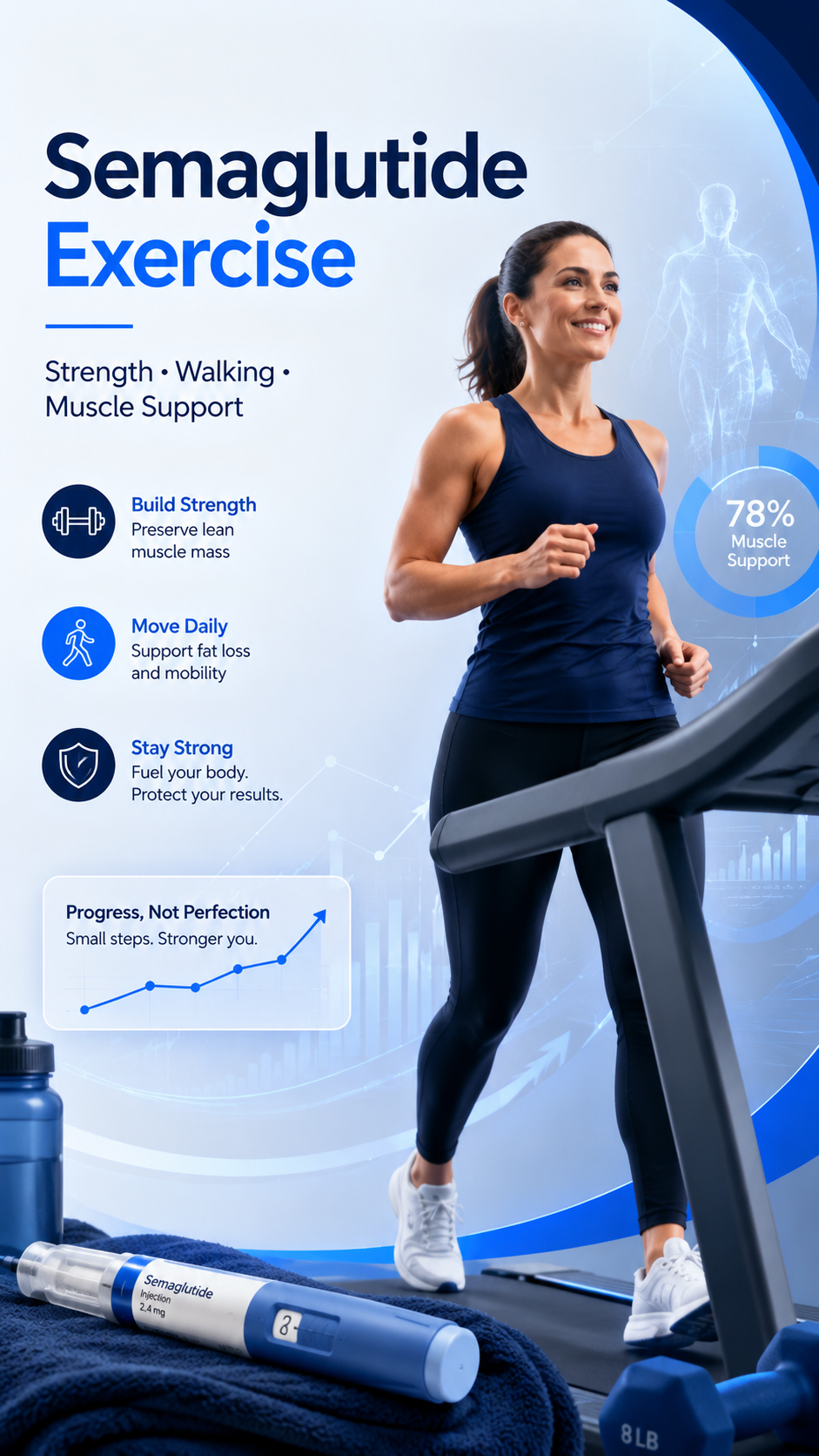
Semaglutide Exercise
How To Exercise While Taking Semaglutide
Semaglutide exercise should support muscle, strength, energy, mobility, digestion, body composition, and long-term maintenance while appetite drops and weight changes.
First, semaglutide can help many patients feel full sooner and eat less. However, weight loss can include fat, water, and lean mass, so muscle support matters from the start.
Therefore, the best workout plan should not punish the body. Instead, it should help the body stay strong, move better, recover well, and build habits that last.
Direct Answer
What Exercise Should You Do On Semaglutide?
Most patients on semaglutide should combine walking, strength training, mobility, balance, recovery, protein, and hydration while adjusting intensity for symptoms, energy, health history, and fitness level.
The Simple Explanation
Semaglutide may lower hunger and make meals smaller. Because of that, some patients lose weight but also eat less protein and fewer total nutrients.
So, exercise should protect strength and function. It should help the patient keep muscle, move well, and feel more capable.
The Main Patient Takeaway
The goal is not extreme cardio or intense workouts every day. Instead, the goal is a repeatable plan with strength training, walking, and recovery.
Also, workouts should match the day. Nausea, vomiting, diarrhea, dizziness, dehydration signs, or very low intake should lower the workout intensity.
Why Exercise Matters
Why Exercise Matters More During Semaglutide Weight Loss
Exercise matters during semaglutide treatment because muscle supports strength, balance, glucose use, mobility, posture, daily function, and long-term maintenance.
Strength Protects Function
First, muscle helps you stand, walk, climb stairs, carry groceries, and stay active.
Movement Supports Digestion
Next, gentle walking may help some patients feel less sluggish and support bowel movement patterns.
Exercise Supports Body Composition
Also, the scale cannot show fat, muscle, water, or strength. Therefore, body composition matters.
Training Builds Confidence
Because movement can improve daily function, patients may feel more confident as strength and stamina improve.
Recovery Prevents Burnout
However, hard workouts without enough food, protein, fluids, or sleep can backfire.
Habits Support Maintenance
Finally, movement habits should start before goal weight because maintenance begins early.
Quick Reference
Semaglutide Exercise At A Glance
A balanced semaglutide exercise plan should include strength training, walking, mobility, balance, protein, hydration, and symptom-aware recovery.
Exercise Quick Reference Table
| Exercise Focus | Why It Matters | Simple Starting Step |
|---|---|---|
| Strength training | Supports muscle, strength, function, and maintenance. | Train major muscle groups 2 days per week when appropriate. |
| Walking | Supports consistency, digestion, stamina, and heart health. | Start with 10 minutes once daily or after meals. |
| Mobility | Supports joints, posture, and ease of movement. | Use 5 minutes of gentle stretching or range-of-motion work. |
| Balance | Supports stability and safety. | Practice supported balance drills 2 to 3 days per week. |
| Protein | Supports muscle repair and workout recovery. | Plan protein across the day. |
| Hydration | Supports energy, bowel habits, and exercise tolerance. | Sip fluids before and after movement. |
Strength First
Strength Training Is The Foundation
Strength training is the most important exercise type for many semaglutide patients because it helps send the body a clear signal to keep and use muscle.
Protein Gives The Building Blocks
First, protein gives the body amino acids. These support muscle repair and maintenance.
Strength Training Gives The Signal
Next, strength training tells the body that muscle still has a job. Therefore, protein and strength work best together.
Simple Counts
Also, patients do not need a gym to start. Chair stands, wall push-ups, bands, dumbbells, and household items can help.
Form Comes Before Intensity
Finally, safe form matters more than heavy weight. Controlled reps build confidence and reduce injury risk.
Beginner Strength Moves
- Sit-to-stand from a chair
- Wall push-ups
- Resistance band rows
- Glute bridges
- Step-ups
- Farmer carries
- Heel raises
- Dead bugs or heel taps
Beginner Workouts
Beginner Semaglutide Workouts
Beginner semaglutide workouts should feel simple, safe, repeatable, and easy to adjust for nausea, low appetite, fatigue, reflux, constipation, or low fluids.
Beginner Workout 1: Full-Body Chair And Wall Workout
| Exercise | How To Do It | Beginner Goal |
|---|---|---|
| Chair sit-to-stand | Sit in a chair, stand with control, then sit back down slowly. | 2 sets of 8 to 10 reps. |
| Wall push-up | Place hands on a wall, bend elbows, then push back to start. | 2 sets of 8 to 12 reps. |
| Standing band row | Pull a resistance band toward your ribs while keeping shoulders down. | 2 sets of 8 to 12 reps. |
| Standing heel raise | Hold support, rise onto toes, then lower slowly. | 2 sets of 10 to 12 reps. |
| Farmer carry | Hold light weights or bags and walk with tall posture. | 2 carries of 20 to 40 seconds. |
| Easy walk | Walk indoors, outdoors, or on a treadmill. | 5 to 15 minutes. |
Beginner Workout 2: Floor-Free Strength Workout
| Exercise | How To Do It | Beginner Goal |
|---|---|---|
| Step-up | Step onto a low step, then step down with control. | 2 sets of 6 to 8 reps per side. |
| Counter push-up | Place hands on a counter and perform a controlled push-up. | 2 sets of 8 to 10 reps. |
| Band pull-apart | Hold a band in front of you and pull it apart gently. | 2 sets of 8 to 12 reps. |
| Supported split stance | Stand with one foot forward and one back, bend slightly, then return. | 2 sets of 6 reps per side. |
| Suitcase carry | Carry one light weight at your side, then switch sides. | 2 carries of 20 seconds per side. |
| Mobility cool-down | Move shoulders, hips, ankles, and neck gently. | 5 minutes. |
Start Small
First, one short workout that happens is better than a perfect plan that gets skipped.
Use Easy Effort
Next, most beginner sets should feel like you could still do 2 or 3 more reps with good form.
Repeat Before Progressing
Finally, repeat the same workout for 2 to 4 weeks before adding more difficulty.
Advanced Workouts
Advanced Semaglutide Workouts
Advanced semaglutide workouts can include heavier strength training, structured cardio, intervals, and more weekly volume, but patients should still protect protein, hydration, recovery, and safety.
Advanced Workout 1: Full-Body Strength Day
| Exercise | How To Do It | Advanced Goal |
|---|---|---|
| Goblet squat or leg press | Use controlled depth and steady form. | 3 to 4 sets of 6 to 10 reps. |
| Dumbbell Romanian deadlift | Hinge at the hips and keep the back steady. | 3 to 4 sets of 8 to 10 reps. |
| Dumbbell bench press or machine press | Press with control and avoid bouncing. | 3 sets of 8 to 12 reps. |
| Seated cable row or one-arm dumbbell row | Pull shoulder blades back and keep the neck relaxed. | 3 sets of 8 to 12 reps. |
| Farmer carry | Carry moderate weights with tall posture. | 3 carries of 30 to 60 seconds. |
| Plank or dead bug | Brace the core without holding breath. | 3 sets of 20 to 45 seconds or 8 reps per side. |
Advanced Workout 2: Upper And Lower Split
| Training Day | Exercise Examples | Advanced Goal |
|---|---|---|
| Lower body day | Squat or leg press, Romanian deadlift, step-up, hip thrust, calf raise, carry. | 3 to 4 sets per main move. |
| Upper body day | Chest press, row, shoulder press, pulldown, biceps curl, triceps pressdown. | 3 to 4 sets per main move. |
| Conditioning day | Incline walk, bike, rower, swimming, or intervals. | 20 to 35 minutes based on recovery. |
| Recovery day | Mobility, easy walking, light yoga, or stretching. | 20 to 30 minutes easy. |
Advanced Conditioning Options
| Workout Type | Example | When It Fits |
|---|---|---|
| Zone 2 cardio | 30 to 45 minutes of steady walking, cycling, or rowing. | Good for stamina and recovery-friendly conditioning. |
| Intervals | 1 minute harder, 2 minutes easy, repeat 6 to 8 rounds. | Only when hydration, food intake, and recovery feel strong. |
| Incline walk | 20 to 30 minutes at a moderate incline. | Good lower-impact conditioning for many patients. |
| Circuit training | Squat, row, press, carry, and bike in controlled rounds. | Best for experienced patients with good form and symptom control. |
Advanced Does Not Mean Reckless
First, advanced patients still need protein, fluids, sleep, and symptom awareness. A hard workout on a low-intake day can feel unsafe.
Progress Slowly
Next, add weight, reps, sets, or cardio time gradually. Do not increase everything at once.
Beginner Weekly Plan
A Beginner Weekly Semaglutide Exercise Plan
A beginner weekly plan should build confidence with short strength workouts, walking, mobility, and rest.
Beginner 7-Day Plan
| Day | Workout | Focus |
|---|---|---|
| Monday | Beginner strength workout 1, 20 minutes. | Legs, push, pull, carry. |
| Tuesday | Walk 10 to 20 minutes plus gentle stretching. | Consistency and digestion. |
| Wednesday | Rest or 5 to 10 minutes of mobility. | Recovery. |
| Thursday | Beginner strength workout 2, 20 minutes. | Strength and balance. |
| Friday | Walk 10 to 20 minutes. | Stamina and routine. |
| Saturday | Optional easy walk, bike, pool walk, or mobility. | Enjoyable movement. |
| Sunday | Rest, meal prep, hydration focus, and short stretch. | Prepare for the next week. |
Beginner Rule
First, do less than you think you can do during week one. Then, build slowly. This helps reduce soreness and makes the plan easier to repeat.
Advanced Weekly Plan
An Advanced Weekly Semaglutide Exercise Plan
An advanced weekly plan can include 3 to 4 strength sessions, 2 to 3 cardio sessions, mobility, and recovery, but only when symptoms, food intake, and hydration support that workload.
Advanced 7-Day Plan
| Day | Workout | Focus |
|---|---|---|
| Monday | Lower body strength, 45 to 60 minutes. | Squat, hinge, step-up, carry. |
| Tuesday | Zone 2 cardio, 30 to 45 minutes. | Stamina and heart health. |
| Wednesday | Upper body strength, 45 to 60 minutes. | Press, row, pulldown, arms, core. |
| Thursday | Mobility plus easy walk, 20 to 30 minutes. | Recovery and joint comfort. |
| Friday | Full-body strength, 40 to 55 minutes. | Total-body muscle signal. |
| Saturday | Intervals or incline walk, 20 to 30 minutes. | Conditioning, only if recovery is strong. |
| Sunday | Rest or gentle mobility. | Recovery, protein, hydration, sleep. |
Watch Recovery
First, soreness, poor sleep, low energy, or weaker lifts may mean the plan needs more recovery.
Fuel The Work
Next, advanced workouts require more attention to protein, fluids, and meal timing.
Adjust During Dose Changes
Finally, reduce intensity if a dose change increases nausea, reflux, diarrhea, fatigue, or low appetite.
4-Week Progression
How To Progress Workouts Safely On Semaglutide
Progress should happen slowly because the body needs time to adapt to exercise, lower appetite, weight change, and possible side effects.
4-Week Progression Table
| Week | Beginner Progression | Advanced Progression |
|---|---|---|
| Week 1 | 2 short strength days and 2 to 3 walks. | Use normal weights but reduce volume by 10% to 20% if starting semaglutide or changing dose. |
| Week 2 | Add 1 set or 5 minutes of walking if recovery feels good. | Add small load or reps to 1 to 2 lifts only. |
| Week 3 | Add another walking day or slightly longer strength sessions. | Add conditioning only if protein, fluids, and recovery feel strong. |
| Week 4 | Repeat the plan and improve form before adding more. | Review performance, symptoms, sleep, and soreness before increasing volume. |
Good Progress Looks Like This
- You recover between workouts
- You can keep good form
- You feel stronger during daily tasks
- You do not feel dizzy during workouts
- Your symptoms stay manageable
- You can eat enough protein
- You can stay hydrated
- You can repeat the plan next week
Walking And Cardio
Walking And Cardio Still Matter
Walking and cardio support stamina, heart health, energy, digestion, and consistency, but they should work alongside strength training rather than replace it.
Walking Is The Easiest Starting Point
First, walking can fit into many schedules. Patients can walk after meals, during breaks, or while talking on the phone.
Cardio Should Match Energy
Next, cardio should feel easier on low-intake days and more structured on strong days.
Short Walks Count
Also, three 5-minute walks can still build a habit. Patients do not need one long workout every day.
Strength Still Matters
Finally, walking supports health, but muscle needs strength training too.
Cardio Options
- Outdoor walking
- Treadmill walking
- Incline walking
- Stationary bike
- Swimming or pool walking
- Elliptical
- Rowing machine
- Short intervals when appropriate
Side Effect Adjustments
How Semaglutide Side Effects Can Change Workouts
Semaglutide side effects can affect exercise when nausea, reflux, constipation, diarrhea, vomiting, dehydration, or fatigue changes comfort and safety.
Nausea Calls For Less Intensity
First, nausea may feel worse during hard workouts. Gentle walking or mobility may fit better.
Reflux Calls For Timing Changes
Next, avoid floor work, jumping, or bending soon after meals if reflux appears.
Diarrhea Or Vomiting Calls For Caution
Also, fluid loss can raise dehydration risk. Hard workouts should wait until symptoms improve.
Dizziness Means Stop
Finally, stop exercise if dizziness, faintness, confusion, chest pain, or severe shortness of breath appears.
Workout Adjustment Table
| Symptom | Better Choice |
|---|---|
| Mild nausea | Easy walk, gentle mobility, or shorter strength session. |
| Reflux | Walk upright and avoid floor moves after meals. |
| Constipation | Gentle walking, fluids, and mobility when tolerated. |
| Diarrhea | Pause hard workouts and focus on fluids. |
| Vomiting | Rest and seek medical guidance if it continues. |
| Dizziness | Stop exercising and sit down. Contact a provider if it persists. |
Protein And Hydration
Exercise Works Better With Protein And Fluids
Protein and hydration help support workout recovery, strength, energy, bowel habits, temperature control, and safety during semaglutide treatment.
Protein Supports Muscle
First, strength training creates a muscle signal. Protein gives the body building blocks to support that signal.
So, patients should plan protein across the day instead of waiting until hunger appears.
Fluids Support Performance
Next, fluids support energy, digestion, and comfort during movement. This matters if nausea, constipation, diarrhea, or low appetite occurs.
Therefore, patients should sip fluids before and after activity when tolerated.
Workout Fuel Ideas
| Situation | Simple Option | Why It Helps |
|---|---|---|
| Before a light walk | Water and a small meal if needed. | Supports comfort without forcing food. |
| Before strength training | Greek yogurt, egg, smoothie, or small protein meal. | Supports energy and muscle work. |
| After strength training | Protein-forward meal or shake when tolerated. | Supports recovery. |
| During low appetite | Small protein smoothie or cottage cheese. | Helps prevent very low intake. |
| During nausea | Small sips and gentle protein foods. | Supports intake without overwhelming the stomach. |
Body Composition
Exercise Helps You Think Beyond The Scale
Exercise helps patients measure progress through strength, stamina, mobility, energy, clothing fit, and confidence, not only through body weight.
Better Progress Markers
| Progress Marker | What It Shows | How To Track It |
|---|---|---|
| Chair stands | Leg strength and daily function. | Count safe reps in 30 seconds once monthly. |
| Walking time | Stamina and consistency. | Track total minutes per week. |
| Strength numbers | Muscle performance. | Track weights, reps, sets, or band level. |
| Stairs | Leg strength and breathing comfort. | Notice whether stairs feel easier. |
| Energy | Recovery, nutrition, sleep, and hydration. | Rate energy from 1 to 10. |
| Clothing fit | Body changes beyond the scale. | Check fit once monthly. |
Safety
When Should You Pause Exercise?
Patients should pause exercise and seek guidance when symptoms suggest dehydration, low intake, heart or breathing concerns, severe pain, or another medical issue.
Stop For Emergency Symptoms
First, chest pain, fainting, severe shortness of breath, confusion, or severe weakness needs urgent care.
Pause Hard Workouts With Fluid Loss
Next, vomiting or diarrhea can reduce fluids. Hard exercise can make that worse.
Watch Dizziness
Also, dizziness can increase fall risk. Sit down and ask for guidance if it continues.
Ask Before Major Changes
Finally, patients with heart disease, diabetes complications, severe joint pain, balance concerns, or complex health history should ask a provider before starting a harder plan.
Take These Symptoms Seriously
- Chest pain
- Fainting
- Severe shortness of breath
- Confusion
- Repeated vomiting
- Signs of dehydration
- Severe belly pain
- Sharp joint pain
- New numbness or weakness
Common Mistakes
Common Exercise Mistakes On Semaglutide
Exercise mistakes can happen when patients do too much too soon, skip strength training, ignore protein, forget fluids, or treat exercise like punishment.
Mistake And Better Step Table
| Common Mistake | Why It Can Backfire | Better Step |
|---|---|---|
| Only doing cardio | Walking helps, but muscle needs a direct strength signal. | Add strength training when appropriate. |
| Doing too much too soon | Soreness, fatigue, or injury can stop consistency. | Start small and progress slowly. |
| Skipping protein | Strength training needs nutrition support. | Plan protein across the day. |
| Forgetting fluids | Low fluids can worsen fatigue, constipation, and dizziness. | Sip fluids before and after activity. |
| Training hard during vomiting or diarrhea | Fluid loss can make exercise unsafe. | Rest, hydrate as directed, and seek guidance if symptoms continue. |
| Using exercise as punishment | Shame-based workouts usually do not last. | Use movement to support strength, confidence, and health. |
Provider-Guided Care
When To Ask A Provider About Exercise On Semaglutide
Provider guidance matters when patients have medical conditions, severe side effects, rapid weight loss, weakness, dizziness, pain, or uncertainty about safe exercise.
Ask If You Feel Weak Or Dizzy
First, weakness or dizziness may connect to low intake, low fluids, medication tolerance, blood sugar, or another concern.
Ask If Side Effects Limit Activity
Next, nausea, vomiting, diarrhea, constipation, reflux, or fatigue can change workout safety.
Ask If You Have Pain Or Balance Concerns
Also, joint pain, back pain, neuropathy, or balance issues may require a modified plan.
Ask Before Advanced Training
Finally, advanced training can be helpful for some patients, but it should fit health history, nutrition, recovery, and symptoms.
Recrea Health & Wellness
Recrea Health & Wellness is the licensed medical organization behind RealGLP.Life and can provide provider-guided support when appropriate.
Contact Recrea
- Call: 330-952-0391
- Email: info@recreahealth.com
- Visit: 2425 Medina RD Suite 101, Medina, OH 44256
Helpful Health Sources
Keep Learning From Trusted Health Sources
RealGLP.Life explains semaglutide exercise in plain language. These health and research sources can help you keep learning from trusted organizations.
MedlinePlus Semaglutide Injection
MedlinePlus provides patient-friendly semaglutide information from the National Library of Medicine, including how semaglutide works and common side effects.
CDC Adult Physical Activity Guidance
CDC explains adult physical activity guidance, including aerobic activity and muscle-strengthening activity for major muscle groups.
NIDDK Weight-Management Medicines
NIDDK explains prescription weight-management medicines and why patients should discuss risks and benefits with a healthcare professional.
Exercise Training And Weight Loss Research
NIH-indexed research reviews how exercise training can affect weight loss, body composition, and weight maintenance.
Preserving Healthy Muscle During Weight Loss
NIH-indexed research discusses muscle health, weight loss, and why preserving muscle deserves attention during weight management.
Resistance Training And Body Composition Research
NIH-indexed research reviews resistance training and body composition outcomes in adults with overweight and obesity.
Learning Path
What To Read Next About Semaglutide
Semaglutide exercise connects to protein, nutrition, side effects, results, body composition, injections, and maintenance.
Semaglutide Protein
First, learn how protein supports muscle, strength, fullness, and workout recovery.
Semaglutide Nutrition
Next, learn how meals, fluids, fiber, and smaller portions support exercise tolerance.
Semaglutide Side Effects
Also, learn how nausea, reflux, constipation, diarrhea, and fatigue can affect workouts.
Semaglutide Results Timeline
Then, learn how appetite, weight, energy, and strength may change over time.
Body Composition
However, the scale does not show muscle, fat, water, or function. Learn why body composition matters.
Semaglutide Maintenance
Finally, learn how movement habits support long-term maintenance.
Expert Tip
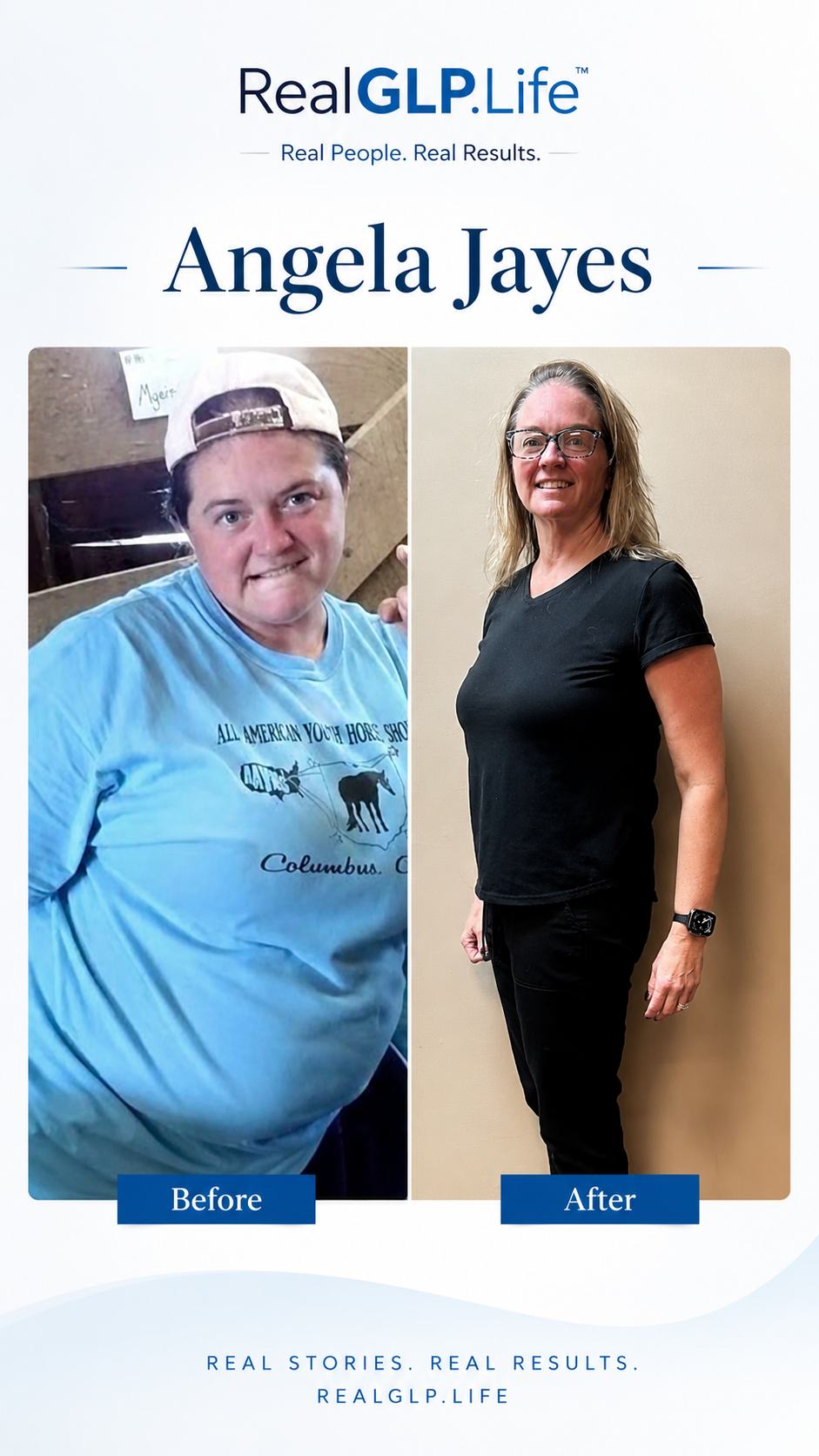
Angela Jayes, NP On Exercise During Semaglutide Treatment
Think Strength, Not Punishment
Exercise should help patients protect strength, movement, confidence, and long-term health. It should not feel like punishment for eating or for weight gain.
Match The Workout To The Day
Also, a strong day may support strength training. However, a nausea day may call for a short walk, mobility, or rest.
Build A Plan You Can Repeat
Finally, the best exercise plan is the plan patients can repeat safely. Small steps can become lasting change when protein, fluids, and recovery support the work.
FAQ
Common Semaglutide Exercise Questions
These short answers help patients understand how to exercise while taking semaglutide.
What exercise should I do on semaglutide?
Many patients should focus on walking, strength training, mobility, balance, and recovery. However, the best plan depends on fitness level, symptoms, and medical history.
Is strength training important on semaglutide?
Yes. Strength training helps support muscle, function, body composition, and maintenance during weight loss.
What is a good beginner workout on semaglutide?
A good beginner workout can include chair sit-to-stands, wall push-ups, band rows, heel raises, farmer carries, and a short walk.
What is an advanced workout on semaglutide?
An advanced workout may include squats or leg press, Romanian deadlifts, presses, rows, carries, core work, and structured cardio, but only when recovery, food, and fluids support it.
Should I exercise if semaglutide makes me nauseated?
Use gentle movement or rest during nausea. Avoid hard workouts if nausea is strong, fluids are low, or vomiting occurs.
How often should I strength train on semaglutide?
Many adults can aim for strength training 2 days per week when appropriate. More experienced patients may train more often if recovery, nutrition, and symptoms allow.
Educational Use Only
This Semaglutide Exercise Guide Does Not Replace Medical Care
Education Helps You Prepare
RealGLP.Life provides educational content only. It does not provide medical advice, diagnosis, exercise prescription, or treatment.
Your Provider Guides Personal Exercise Needs
Because exercise needs depend on health history, medications, joints, balance, symptoms, labs, nutrition, hydration, and goals, speak with a qualified healthcare provider before making major changes.
Urgent Symptoms Need Prompt Care
If you have chest pain, fainting, severe shortness of breath, severe weakness, confusion, repeated vomiting, severe belly pain, or signs of a medical emergency, seek medical care right away.
Ready To Build A Smarter Semaglutide Exercise Plan?
Start with walking, strength training, protein, fluids, and symptom-aware movement. Then, speak with a qualified provider when you need personal guidance.