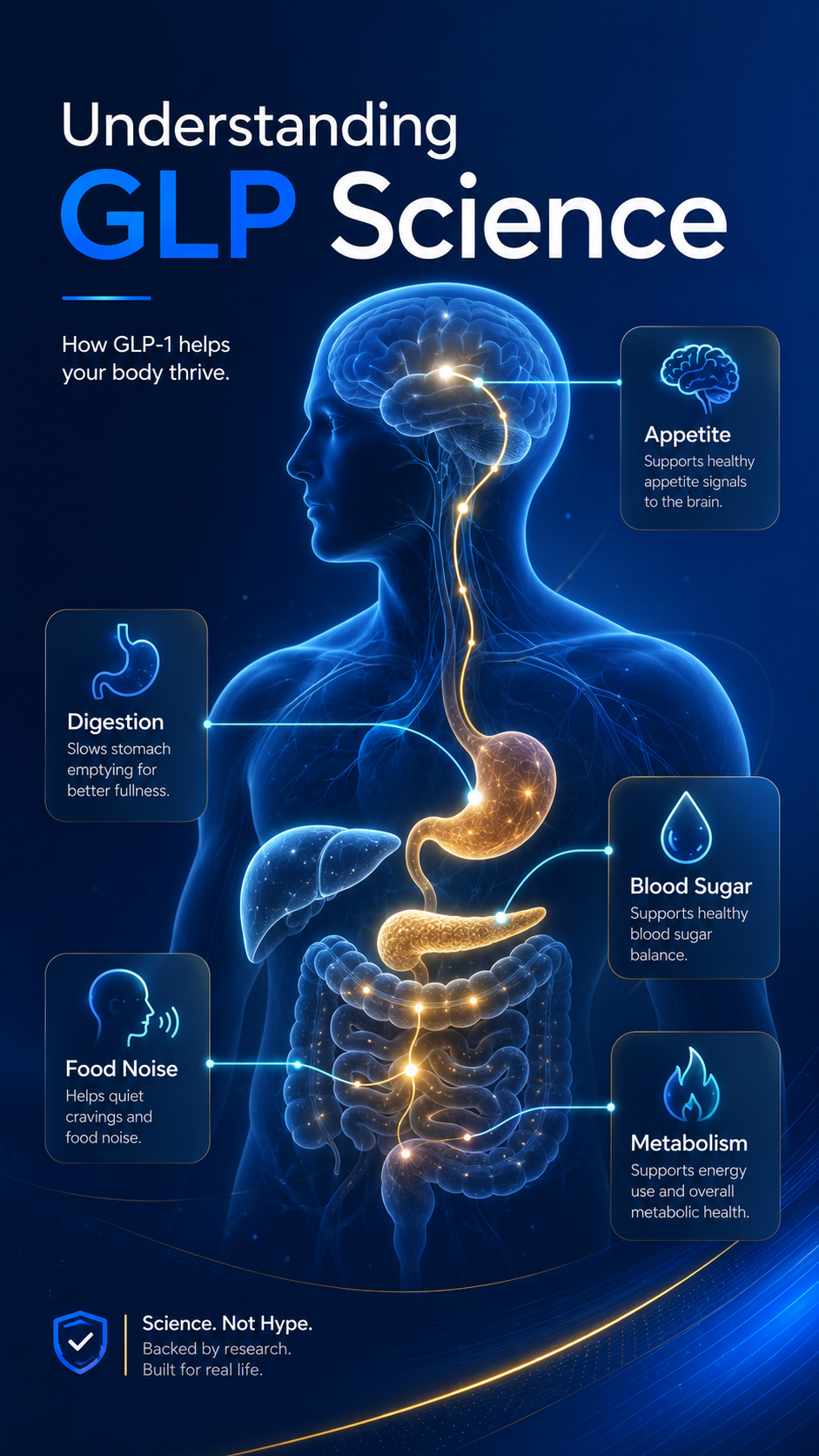
GLP Science
Understand The Science Behind GLP Medications
GLP science explains how medications like semaglutide and tirzepatide can affect appetite, fullness, digestion, blood sugar signals, food noise, and long-term metabolic health.
First, this hub explains what happens in the gut, brain, pancreas, liver, stomach, muscle, and fat tissue during GLP treatment. Then, it connects those systems to real patient questions about hunger, cravings, side effects, protein, muscle, metabolism, and maintenance.
However, science should not feel confusing. Therefore, RealGLP.Life explains GLP science in plain language so patients can understand what is happening inside the body and ask better questions during care.
Direct Answer
What Is GLP Science?
GLP science is the study of how gut hormones, brain signals, digestion, insulin, appetite, and metabolism work together before, during, and after GLP treatment.
The Simple Explanation
GLP medications do not work by forcing willpower. Instead, they work with body signals that help regulate hunger, fullness, digestion, blood sugar, and food-related thoughts.
Also, these signals connect to many parts of the body. Because of that, patients may notice changes in appetite, meal size, cravings, nausea, constipation, energy, and body composition.
Why This Hub Matters
Many patients hear about GLP medications before they understand the science. As a result, they may think the medicine is only about eating less.
However, the real story is broader. GLP treatment connects to hormones, the gut, the brain, the pancreas, the liver, muscle, fat tissue, and long-term metabolic health.
How It Works
How GLP Medications Work In Plain Language
GLP medications work by copying or strengthening natural body signals that help control hunger, fullness, digestion, and blood sugar after eating.
Step 1: Your Gut Sends Signals After You Eat
First, when food enters your gut, your body releases hormone signals. These signals help tell the brain, stomach, pancreas, and liver that food has arrived.
One of those signals is called GLP-1. It helps the body respond to food in a more organized way.
Step 2: The Brain Gets A Stronger Fullness Message
Next, GLP medications can strengthen fullness signals in the brain. As a result, some people feel satisfied with less food.
This is why many patients say, “I get full faster,” or “I do not think about food as much.”
Step 3: The Stomach Empties More Slowly
Also, GLP medications can slow how fast food leaves the stomach. This can help fullness last longer after a meal.
However, this same effect can also explain nausea, reflux, bloating, constipation, or feeling too full after larger meals.
Step 4: Blood Sugar Signals Become More Coordinated
Then, GLP signals help the pancreas release insulin when blood sugar rises after eating. Insulin helps move sugar from the blood into the body’s cells.
GLP signals can also reduce extra glucagon signals when they are not needed. Glucagon tells the liver to release stored sugar.
Step 5: Food Noise May Quiet Down
Because appetite and reward signals can change, some patients notice fewer constant thoughts about food. This is often called lower food noise.
However, lower food noise does not replace nutrition. Patients still need protein, fluids, fiber, and enough total intake.
Step 6: Habits Still Shape Long-Term Results
Finally, medication changes signals, but daily habits still matter. Protein helps protect muscle. Hydration supports digestion. Strength activity supports body composition.
Therefore, the best GLP journey usually combines medication education, nutrition, movement, side effect support, and provider follow-up.
Big Picture
GLP Medications Work With Body Systems
GLP medications affect several body systems at once. Therefore, patients may notice changes in hunger, digestion, blood sugar, cravings, energy, side effects, and body composition.
Brain
First, the brain receives hunger and fullness signals. GLP treatment may help some patients feel less driven to eat.
Stomach
Next, the stomach may empty more slowly. Therefore, fullness may last longer, but large meals may feel harder.
Pancreas
Also, the pancreas helps release insulin after meals. GLP signals help coordinate this response when blood sugar rises.
Liver
The liver stores and releases sugar. GLP signals can help reduce extra sugar release when the body does not need it.
Muscle
Muscle helps use blood sugar and supports strength. Because weight loss can include lean mass, muscle support matters.
Fat Tissue
Finally, fat tissue is active tissue that connects to hormones, inflammation, energy storage, and metabolic health.
Quick Facts
GLP Science At A Glance
This table gives you the core GLP science concepts before the hub goes deeper.
Science Quick Reference Table
| Science Concept | Plain-Language Meaning | Why Patients Care |
|---|---|---|
| GLP-1 | A gut hormone signal involved in appetite, digestion, insulin, and blood sugar response. | It helps explain why semaglutide and similar medications can affect hunger and fullness. |
| GIP | Another incretin hormone signal involved in metabolic response after eating. | It helps explain why tirzepatide is often discussed as a dual-pathway medication. |
| Appetite regulation | The body uses brain, gut, hormone, and energy signals to influence hunger. | It helps patients understand that hunger is biological, not just willpower. |
| Food noise | Persistent or intrusive thoughts about food, eating, cravings, or hunger. | It helps patients describe a common experience that may change during treatment. |
| Insulin resistance | A state where the body has more trouble responding to insulin. | It helps explain why metabolic health involves blood sugar, weight, muscle, and lifestyle. |
| Body composition | The balance of fat mass, lean mass, muscle, bone, and water. | It helps patients think beyond the scale during weight loss. |
Hormone Signals
What Does GLP-1 Do In The Body?
GLP-1 is a natural hormone signal involved in appetite, fullness, digestion, insulin response, and blood sugar regulation after meals.
GLP-1 Helps The Body Respond To Food
First, the body releases gut hormone signals after eating. GLP-1 is one of those signals. It helps the body respond to food in a coordinated way.
GLP-1 Connects The Gut And Brain
Next, GLP-1 pathways connect gut activity with brain appetite signals. Therefore, this pathway can influence hunger and fullness.
GLP-1 Can Affect Digestion
Also, GLP-1 can slow stomach emptying. This may help fullness last longer, but it may also contribute to nausea, reflux, bloating, or constipation for some patients.
GLP-1 Connects To Blood Sugar
Finally, GLP-1 helps explain why these medications also matter in metabolic health conversations, not only weight conversations.
GLP-1 Patient Takeaways
- Hunger is partly biological
- Fullness involves gut and brain signals
- Digestion can change during treatment
- Side effects often relate to the gut
- Nutrition still matters
- Provider guidance still matters
GIP
What Is GIP, And Why Does It Matter?
GIP is another incretin hormone signal that helps explain part of the science behind tirzepatide and dual-pathway GLP education.
GIP Is Part Of Metabolic Signaling
First, GIP is involved in how the body responds after eating. It connects to insulin response and broader metabolic signaling.
Tirzepatide Uses A Dual-Pathway Approach
Next, patients often hear that tirzepatide works with GLP-1 and GIP-related pathways. Because of this, many people compare tirzepatide with semaglutide.
Dual Pathway Does Not Mean Better For Everyone
However, medication choice depends on health history, symptoms, goals, access, risks, and provider guidance. Therefore, patients should avoid choosing based on online hype.
Science Should Support Better Questions
Finally, learning about GIP can help patients ask smarter questions about tirzepatide, not self-direct treatment decisions.
GIP Patient Takeaways
- GIP is an incretin signal
- It connects to metabolic response
- It helps explain tirzepatide science
- It does not replace provider guidance
- It belongs in comparison education
Appetite Biology
Why Hunger Is Not Just A Willpower Problem
Hunger comes from body signals. These signals include hormones, brain pathways, blood sugar patterns, digestion, sleep, stress, habits, and environment.
The Brain Reads Body Signals
First, the brain receives signals from the gut, fat tissue, blood sugar patterns, and hormones. These signals help shape hunger and fullness.
The Gut Sends Fullness Signals
Next, the gut helps tell the brain when food has arrived. Therefore, digestion speed and meal size can influence how full a person feels.
Blood Sugar Can Affect Hunger
Also, blood sugar changes may affect hunger, cravings, energy, and food choices for some people.
Sleep Can Affect Appetite
Because sleep affects hormones and decision-making, poor sleep may make hunger and cravings harder to manage.
Stress Can Affect Eating
However, stress can change hunger, cravings, digestion, and eating patterns. This does not mean the person lacks discipline.
Medication Can Change Signals
Finally, GLP medications may help change some signals, but patients still need habits, nutrition, and support.
Appetite Science Table
| Factor | How It Can Affect Appetite | Patient-Friendly Next Step |
|---|---|---|
| GLP-1 signaling | May support fullness and appetite regulation. | Learn how your medication works and track changes. |
| Digestion speed | Can affect fullness, nausea, reflux, and meal comfort. | Try smaller meals if fullness comes quickly. |
| Sleep | Can affect hunger, cravings, and energy. | Protect a steady sleep routine when possible. |
| Stress | Can affect cravings, food choices, and digestion. | Notice patterns without shame or judgment. |
| Protein | Can support fullness, muscle, and steadier meals. | Plan protein before appetite drops too low. |
Food Noise
What Is Food Noise?
Food noise means frequent or intrusive thoughts about food, eating, cravings, snacking, hunger, or the next meal.
Food Noise Can Feel Constant
First, some patients describe food thoughts as loud, repetitive, or hard to ignore. These thoughts can happen even when the person tries to focus on something else.
Food Noise Has Biological And Behavioral Layers
Next, food noise may connect to appetite signals, reward pathways, habits, stress, sleep, environment, and learned patterns.
GLP Treatment May Change The Experience
Also, some patients report less food noise during GLP treatment. As a result, they may feel more able to pause, plan, and make steady choices.
Lower Food Noise Still Needs Structure
However, fewer food thoughts do not replace nutrition. Therefore, patients should still plan protein, hydration, fiber, and meal timing.
Food Noise Examples
- Thinking about food often
- Feeling pulled toward snacks
- Planning the next meal early
- Feeling distracted by cravings
- Feeling less satisfied after eating
- Feeling relief when food thoughts quiet down
Digestion
Why GLP Medications Can Affect The Stomach And Gut
GLP medications can affect digestion speed and gut signaling. Therefore, side effects often involve nausea, constipation, reflux, fullness, diarrhea, or vomiting.
Slower Stomach Emptying
First, GLP pathways can slow how quickly food leaves the stomach. This may help some patients feel full longer.
However, slower stomach emptying can also make large meals feel uncomfortable. As a result, some patients do better with smaller meals.
Gut Side Effects
Next, nausea, constipation, reflux, diarrhea, bloating, or vomiting can happen for some patients. These symptoms may appear during early treatment or dose changes.
Therefore, patients should track symptoms and contact a provider when symptoms feel severe, persistent, or concerning.
Digestion And Side Effect Table
| Gut Change | What Patients May Notice | What May Help |
|---|---|---|
| Food stays in the stomach longer | Fullness, nausea, reflux, or lower appetite. | Smaller meals and provider-guided symptom review. |
| Total food intake drops | Low energy, constipation, or low protein intake. | Protein planning, fluids, and simple meal rhythm. |
| Fluid intake drops | Constipation, dizziness, fatigue, or dehydration concerns. | Steady sipping and prompt help for severe symptoms. |
| Meal size stays too large | Reflux, discomfort, nausea, or bloating. | Smaller portions and slower eating. |
Blood Sugar
How GLP Science Connects To Blood Sugar
GLP pathways connect to insulin and glucagon signals, which help the body manage blood sugar after eating.
Insulin Helps Move Sugar
First, insulin helps move sugar from the blood into cells. This matters because cells need energy to function.
Glucagon Helps Release Sugar
Next, glucagon helps the body release stored sugar when needed. Balance matters because the body needs steady energy.
GLP-1 Helps Coordinate Signals
Also, GLP-1 is part of the body’s response after eating. It helps explain why GLP medications connect to metabolic health.
Food Choices Still Matter
However, medication does not erase the role of food. Protein, fiber, meal timing, and balanced meals can support steadier patterns.
Medical History Matters
Because blood sugar needs vary, patients with diabetes, low blood sugar concerns, or other conditions need individualized provider guidance.
Labs Give Context
Finally, lab values can help providers understand metabolic health. The scale alone cannot explain the full picture.
Insulin Resistance
What Is Insulin Resistance?
Insulin resistance means the body has more trouble responding to insulin. As a result, the body may need more insulin to manage blood sugar.
Insulin Resistance Can Build Over Time
First, insulin resistance may develop gradually. It often connects to genetics, body composition, activity, sleep, stress, nutrition, and other health factors.
It Is Not A Character Flaw
Next, insulin resistance is a metabolic issue. Therefore, patients should not view it as a personal failure.
Muscle Matters
Also, muscle plays an important role in glucose use and metabolic health. Because of that, muscle preservation matters during weight loss.
Small Habits Can Support Better Patterns
Finally, nutrition, movement, sleep, medication when appropriate, and follow-up care can all support a healthier metabolic plan.
Insulin Resistance May Connect To
- Blood sugar patterns
- Weight changes
- Energy swings
- Hunger and cravings
- Body composition
- Sleep and stress
- Physical activity
- Long-term metabolic health
Metabolism
What Does Metabolism Really Mean?
Metabolism is the way the body uses, stores, and manages energy. It includes many systems, not just how fast someone burns calories.
Metabolism Is A System
First, metabolism includes energy use, blood sugar regulation, fat storage, muscle activity, hormones, digestion, and cellular function.
Also, metabolism changes with age, body composition, sleep, activity, nutrition, medications, and weight changes.
Weight Loss Can Change Energy Needs
Next, when a person loses weight, the body often needs less energy than before. This can make maintenance different from the starting phase.
Therefore, long-term planning should include protein, strength activity, movement, hydration, and follow-up care.
Metabolism Table
| Metabolic Factor | Why It Matters | Helpful Focus |
|---|---|---|
| Lean muscle | Supports strength, function, and energy use. | Protein and strength-focused activity. |
| Blood sugar response | Affects energy, hunger, and metabolic health. | Balanced meals and provider monitoring when appropriate. |
| Sleep | Supports hormones, recovery, appetite, and energy. | Consistent sleep habits when possible. |
| Activity | Supports mobility, muscle, insulin sensitivity, and maintenance. | Daily movement and strength activity as appropriate. |
| Nutrition | Supports protein, micronutrients, digestion, and energy. | Protein, hydration, fiber, and nutrient-dense foods. |
Body Composition
Why Body Composition Matters More Than The Scale Alone
Body composition looks at fat mass, lean mass, muscle, bone, water, and overall physical function instead of focusing only on weight.
The Scale Shows Only One Number
First, the scale cannot show whether weight changes come from fat, muscle, water, or digestion changes. Therefore, scale data needs context.
Muscle Helps Long-Term Health
Next, muscle supports strength, mobility, glucose use, balance, and quality of life. Because weight loss can include muscle loss, patients should protect lean mass.
Protein And Strength Activity Matter
Also, protein and resistance training can help support muscle during weight loss when appropriate for the patient.
Progress Has Many Signs
Finally, better energy, stamina, waist changes, lab trends, strength, sleep, and daily function can all matter alongside weight.
Body Composition Signals To Track
- Strength
- Energy
- Waist changes
- Clothing fit
- Mobility
- Protein intake
- Activity consistency
- Lab trends when available
Medication Science
How Semaglutide And Tirzepatide Fit Into GLP Science
Semaglutide and tirzepatide both connect to GLP education, but they do not work in the exact same way.
High-Level Medication Science Comparison
| Topic | Semaglutide | Tirzepatide |
|---|---|---|
| Main science focus | GLP-1 receptor pathway education. | GLP-1 and GIP-related pathway education. |
| Patient questions | Appetite, fullness, nausea, constipation, nutrition, and results. | Dual pathway science, appetite, comparison, side effects, nutrition, and results. |
| Why it matters | Helps patients understand GLP-1 signaling. | Helps patients understand dual incretin signaling. |
| Best next page | Semaglutide Guide | Tirzepatide Guide |
Science Helps, But It Does Not Choose For You
Science can explain how medications work. However, a provider should help decide which option may fit a person’s medical history, risks, symptoms, access, and goals.
Comparisons Should Stay Balanced
Also, comparison education should help patients ask better questions. It should not make broad promises or treat one medication as best for everyone.
Side Effects
Why Side Effects Often Make Scientific Sense
Many GLP side effects connect to the same body systems that make treatment work: appetite, digestion, gut movement, fluids, and food intake.
Side Effect Science Table
| Side Effect | Possible Science Connection | Patient-Friendly Response |
|---|---|---|
| Nausea | May relate to slower digestion, dose changes, meal size, or food tolerance. | Use smaller meals and contact a provider if symptoms persist or worsen. |
| Constipation | May relate to slower gut movement, lower intake, lower fluids, or lower fiber. | Review fluids, fiber, movement, and provider guidance. |
| Reflux | May relate to fullness, slower stomach emptying, or large meals. | Try smaller meals and avoid forcing large portions. |
| Fatigue | May relate to low intake, dehydration, sleep, or adjustment periods. | Review protein, fluids, meal rhythm, and symptoms. |
| Vomiting | May increase dehydration risk and may require prompt medical review. | Contact a provider, especially if fluids do not stay down. |
Nutrition Connection
Why GLP Science Makes Nutrition More Important, Not Less Important
Because GLP medications can reduce appetite, patients often need a clearer plan for protein, hydration, fiber, and meal timing.
Lower Appetite Can Lower Protein
First, smaller meals can reduce protein intake. Because protein supports lean muscle, patients should plan it early.
Slower Digestion Can Affect Comfort
Next, large meals may feel uncomfortable. Therefore, smaller balanced meals may fit better during treatment.
Hydration Supports Digestion
Also, fluids can support digestion and bowel regularity. This matters because constipation and dehydration concerns may appear.
Fiber Needs Careful Adjustment
Finally, fiber can help some patients, but too much too fast can worsen bloating. So, tolerance matters.
Science-Based Nutrition Priorities
- Protein for muscle support
- Hydration for digestion and energy
- Fiber as tolerated
- Smaller meals for comfort
- Meal timing to prevent low intake
- Provider support for persistent symptoms
Common Misunderstandings
Common GLP Science Myths And Facts
GLP science often gets oversimplified online. These myths and facts help patients understand the topic more clearly.
Myth Vs Fact Table
| Myth | Fact | Why It Matters |
|---|---|---|
| GLP medications are just appetite suppressants. | They work with appetite, digestion, fullness, insulin, glucagon, and metabolic signals. | Patients understand the body-wide picture. |
| Hunger is only about willpower. | Hunger is influenced by hormones, brain signals, sleep, stress, digestion, and environment. | Patients can reduce shame and seek better support. |
| Food noise is imaginary. | Food noise describes a real patient experience involving frequent or intrusive food thoughts. | Patients can name what they feel more clearly. |
| Weight loss always means fat loss. | Weight loss can include fat, water, and lean mass. | Patients learn why protein and strength matter. |
| Science replaces medical guidance. | Science helps patients ask better questions, but care decisions belong with qualified providers. | Patients stay safer and better informed. |
Trusted Medical Sources
Helpful Sources If You Want To Keep Learning
RealGLP.Life explains GLP science in plain language. These trusted health sources can help you keep learning from medical and government organizations.
NIH / NIDDK
The National Institute of Diabetes and Digestive and Kidney Diseases explains prescription weight-management medicines and how some treatments affect appetite, food intake, and metabolic health.
MedlinePlus
MedlinePlus provides patient-friendly health information from the National Library of Medicine, including simple explanations of GLP-1 agonists and medication safety topics.
U.S. Food And Drug Administration
The FDA shares medication safety updates, drug information, and public alerts. Its GLP-1 safety information helps patients understand why medication quality and oversight matter.
American Diabetes Association
The American Diabetes Association explains diabetes medications and metabolic health topics, including GLP-1 and dual GLP-1/GIP medication classes.
Patient Journey
Which Science Topic Should You Learn First?
The best science topic depends on where a patient is in the GLP journey.
Science Learning Path Table
| Patient Stage | What They Usually Wonder | Best Science Topic |
|---|---|---|
| Considering GLP medication | How does this even work? | How GLP-1 Medications Work |
| Comparing options | How is tirzepatide different? | GIP And Dual-Pathway Science |
| Experiencing less hunger | Why am I full sooner? | Appetite and digestion signals |
| Noticing fewer cravings | What happened to food noise? | Food Noise |
| Losing weight | How do I protect muscle? | Body Composition |
| Planning long-term success | How do I maintain results? | Metabolism And Maintenance |
Provider-Guided Understanding
Science Helps Patients Have Better Provider Conversations
GLP science should help patients ask clearer questions, understand their treatment plan, and know when professional guidance matters.
Science Can Explain Patterns
First, science can explain why appetite changes, side effects happen, food noise shifts, or meal size changes.
Science Can Reduce Fear
Next, understanding the “why” behind symptoms can help patients feel calmer and more prepared.
Science Can Improve Follow-Up
Also, patients who understand their body signals can describe symptoms more clearly during follow-up visits.
Science Cannot Replace Individual Care
However, educational science cannot review your labs, history, medications, or risks. Therefore, personal decisions should involve a qualified provider.
Recrea Health & Wellness
Recrea Health & Wellness is the licensed medical organization behind RealGLP.Life and can provide provider-guided support when appropriate.
Contact Recrea
- Call: 330-952-0391
- Email: info@recreahealth.com
- Visit: 2425 Medina RD Suite 101, Medina, OH 44256
Learning Library
What To Read Next About GLP Science
GLP science has several important branches. So, choose the topic that matches your next question.
How GLP-1 Medications Work
First, learn how GLP-1 pathways connect appetite, digestion, fullness, and blood sugar.
Food Noise
Next, learn why some patients think about food often and why that may change during treatment.
GIP
Also, learn how GIP helps explain tirzepatide and dual-pathway medication science.
Body Composition
Then, learn why muscle, fat, water, strength, and function matter more than weight alone.
Insulin Resistance
However, metabolic health often includes blood sugar and insulin response, not only weight.
Metabolism
Finally, learn how energy use, muscle, weight change, and maintenance connect.
Expert Tip
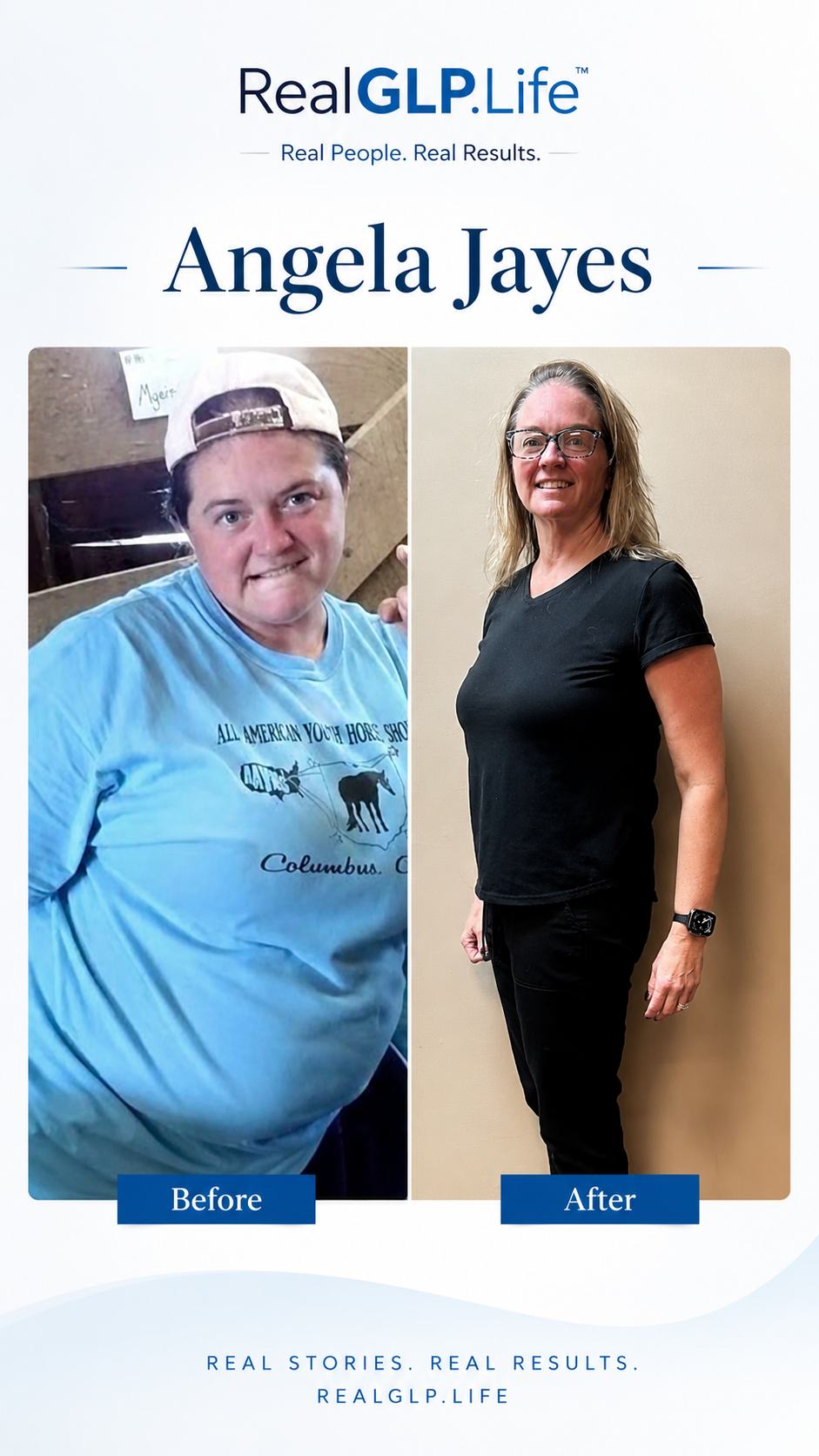
Angela Jayes, NP On GLP Science
Understand The Signal, Not Just The Shot
GLP medications affect body signals. When patients understand those signals, they often feel more prepared to manage appetite, nutrition, side effects, and follow-up care.
Use Science To Ask Better Questions
Also, science should help patients talk more clearly with their provider. It should not create pressure to self-diagnose or self-manage medication decisions.
Think Beyond Weight
Finally, the science of GLP treatment connects to metabolic health, muscle, digestion, energy, and long-term habits. The scale is only one part of the story.
FAQ
Common GLP Science Questions
These short answers help patients understand the main science topics before reading deeper guides.
What does GLP mean?
GLP usually refers to glucagon-like peptide pathways. In patient education, GLP-1 is often discussed because it connects to appetite, digestion, insulin, and blood sugar signals.
How do GLP medications reduce appetite?
GLP medications can affect gut and brain signals involved in hunger and fullness. As a result, some patients feel full sooner or think about food less often.
What is food noise?
Food noise means frequent or intrusive thoughts about food, eating, cravings, or the next meal. Some patients report that food noise changes during GLP treatment.
Why do GLP medications cause nausea?
Nausea may relate to slower digestion, meal size, dose changes, or food tolerance. However, persistent or severe nausea should be reviewed with a provider.
What is the difference between GLP-1 and GIP?
GLP-1 and GIP are both incretin hormone signals. GLP-1 is central to semaglutide education, while GLP-1 and GIP together help explain tirzepatide education.
Does GLP science replace medical advice?
No. GLP science helps patients understand treatment, but personal medical decisions should happen with a qualified healthcare provider.
Educational Use Only
This GLP Science Hub Does Not Replace Medical Care
Education Helps You Understand
RealGLP.Life provides educational content only. It does not provide medical advice, diagnosis, or treatment.
Your Provider Guides Personal Decisions
Because GLP treatment decisions depend on health history, medications, labs, symptoms, goals, and risk factors, speak with a qualified healthcare provider for personal guidance.
Urgent Symptoms Need Prompt Care
If you have severe symptoms, urgent concerns, or signs of a medical emergency, seek medical care right away.
Ready To Understand The Science Behind Your GLP Journey?
Start with clear education. Then, when you need personal guidance, speak with a qualified provider who can connect the science to your health history.