
Tirzepatide Guide
Understand Tirzepatide Before, During, And After Treatment
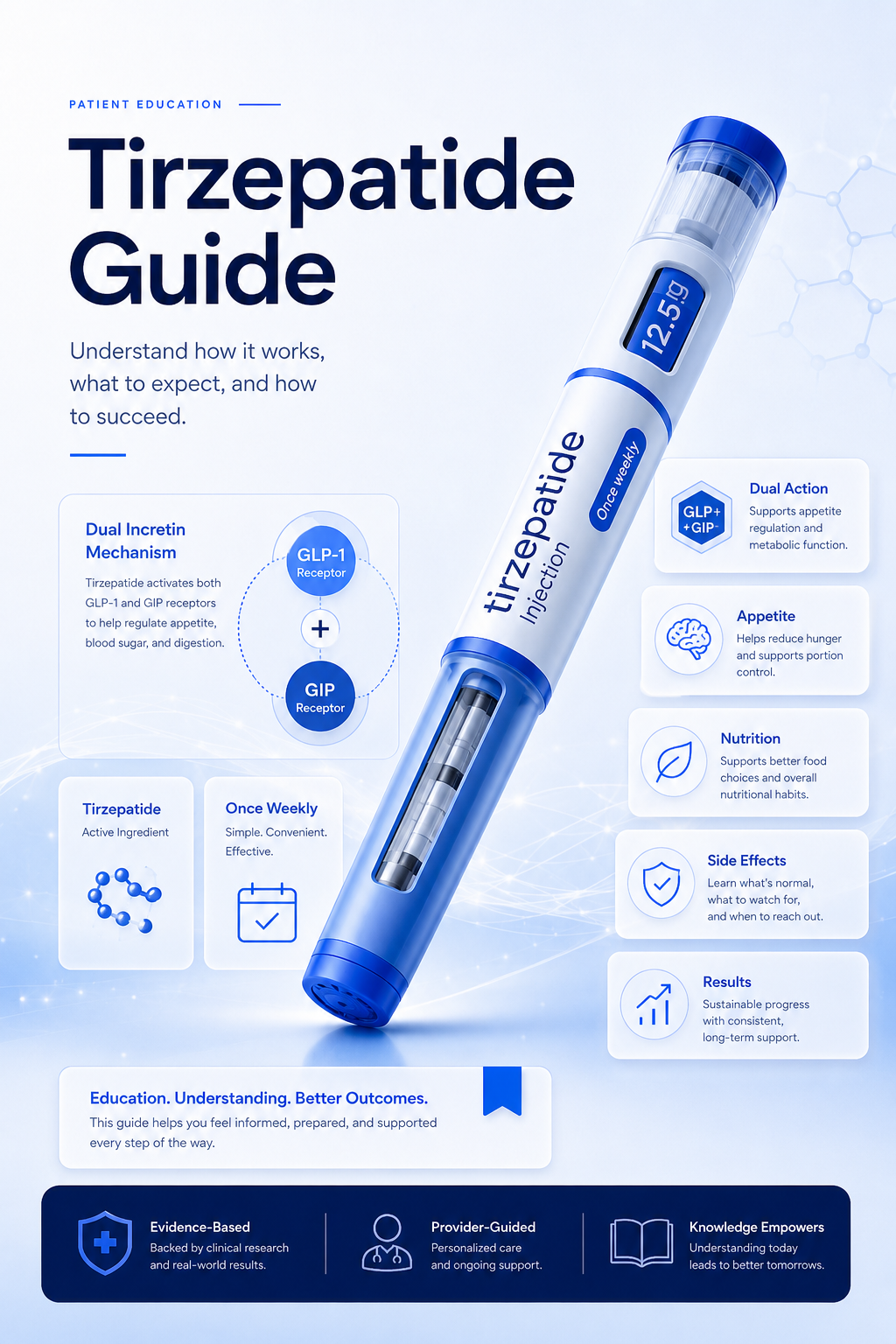
Tirzepatide is a medication that works with GLP and GIP pathways that can affect appetite, fullness, digestion, blood sugar patterns, and metabolic health.
First, this guide explains tirzepatide in plain language. Then, it walks through how it works, why patients compare it with semaglutide, what side effects may happen, how nutrition matters, and why follow-up care matters.
However, tirzepatide is not a one-size-fits-all medication. Therefore, use this page to learn the basics, prepare better questions, and speak with a qualified healthcare provider about your personal plan.
Direct Answer
What Is Tirzepatide?
Tirzepatide is a medication that acts on GLP-1 and GIP-related pathways. In simple terms, it can affect appetite, fullness, digestion, and blood sugar signals.
The Simple Explanation
Tirzepatide helps the body respond differently to food and metabolic signals. Many patients want to understand why appetite may change, why fullness may happen sooner, and why digestion may feel different.
Also, tirzepatide may support weight management and metabolic health when a qualified provider decides it fits a patient’s health history, goals, and safety needs.
Why Patients Ask About It
Because tirzepatide has become a major GLP medication topic, many people hear about it before they understand it. They may know names like Mounjaro or Zepbound, but they may not understand the full treatment journey.
Therefore, this guide focuses on education first. It explains what patients should understand before making treatment decisions with a provider.
Quick Facts
Tirzepatide At A Glance
This quick table gives you the basic tirzepatide facts before the guide goes deeper.
Quick Reference Table
| Category | Patient-Friendly Explanation |
|---|---|
| Medication type | Dual pathway medication often discussed in GLP and GIP education |
| Main body signals | Appetite, fullness, digestion, food intake, and blood sugar patterns |
| Common brand names patients ask about | Mounjaro and Zepbound |
| Common patient questions | How it works, side effects, nutrition, dose changes, results, and comparison with semaglutide |
| Important support topics | Protein, hydration, fiber, strength activity, side effect tracking, and follow-up care |
| Best next step | Use education to prepare, then speak with a qualified healthcare provider |
How It Works
How Tirzepatide Works In The Body
Tirzepatide works with GLP-1 and GIP-related pathways. As a result, it can affect appetite, fullness, digestion, and metabolic responses.
1. GLP-1 Signals
First, tirzepatide acts on GLP-1-related pathways. These signals can affect appetite, fullness, digestion speed, and blood sugar patterns.
2. GIP Signals
Next, tirzepatide also acts on GIP-related pathways. Because GIP is part of metabolic signaling, patients often hear tirzepatide described as a dual-pathway medication.
3. Appetite And Fullness
Also, many patients report changes in hunger and meal size. Therefore, nutrition planning becomes important when appetite drops.
4. Digestion Changes
However, digestion changes can create symptoms. Nausea, constipation, reflux, diarrhea, or early fullness may happen for some patients.
5. Food Noise
Some patients notice fewer constant thoughts about food. As a result, they may feel more able to make steady food choices.
6. Long-Term Habits
Finally, tirzepatide works best when patients also learn nutrition, hydration, movement, symptom tracking, and maintenance habits.
Tirzepatide Is More Than An Appetite Medication
Instead of thinking about tirzepatide as only an appetite tool, patients should understand the full body picture. Appetite, digestion, blood sugar patterns, food noise, nutrition, muscle support, and follow-up care all connect.
Therefore, RealGLP.Life teaches tirzepatide as part of a complete health journey rather than a quick fix.
Brand Names
Mounjaro, Zepbound, And Tirzepatide: What Is The Difference?
Tirzepatide is the active ingredient. Mounjaro and Zepbound are brand names that many patients hear when learning about tirzepatide.
Tirzepatide Is The Ingredient
First, tirzepatide refers to the medication ingredient. Patients may see this word in education, prescribing discussions, medication guides, and pharmacy-related information.
Brand Names Can Have Different Uses
Next, brand names can connect to different approved uses, doses, devices, and prescribing situations. Therefore, patients should not assume every tirzepatide product works the same way for every person.
Your Provider Should Explain Your Specific Plan
Also, your provider should explain which product you use, why it fits your situation, how to take it, and what follow-up looks like.
Helpful Questions To Ask
- Which tirzepatide product am I using?
- Why does this option fit my health history?
- What dose schedule should I follow?
- What side effects should I report?
- How will we track progress?
- What should I eat during treatment?
- How do we plan for long-term success?
Who It May Help
Who Usually Wants To Learn About Tirzepatide?
People often research tirzepatide when they want help understanding appetite, weight management, blood sugar, food noise, or long-term metabolic health.
People Considering Treatment
First, many readers want to understand what tirzepatide does before they talk with a provider or begin treatment.
New Tirzepatide Patients
Next, new patients often need help with appetite changes, smaller meals, hydration, nausea, constipation, and early expectations.
Current Tirzepatide Patients
Also, current patients may need support with plateaus, side effects, nutrition, protein, dose questions, and long-term planning.
Patients Comparing Options
Because tirzepatide is often compared with semaglutide, many patients want a clear explanation of the difference without hype.
Patients Managing Side Effects
However, symptoms can feel stressful. Calm education helps patients know what may be common and when to contact a provider.
Patients Planning Maintenance
Finally, long-term patients may need help thinking about habits, follow-up care, muscle support, and life after major weight changes.
Before Starting
What To Understand Before Starting Tirzepatide
Before starting tirzepatide, patients should understand expectations, risks, daily habits, side effects, and follow-up care.
Health History Matters
First, tirzepatide may not fit every person. Your provider should review your health history, medications, symptoms, goals, and risk factors before making a recommendation.
Medication Review Matters
Also, your medication list matters. Because some conditions or medicines may affect safety decisions, do not rely on generic online advice.
Expectations Matter
Finally, tirzepatide results vary. Some patients notice appetite changes early, while others need more time, dose review, and follow-up.
Daily Habits Matter
Because appetite may drop, patients need a plan for eating enough protein, drinking enough fluids, and avoiding long gaps without nutrition.
Side Effect Planning Matters
However, nausea, constipation, reflux, diarrhea, fatigue, or dehydration can happen. Therefore, patients should know what to track and when to call.
Follow-Up Matters
As a result, treatment should include provider check-ins. Follow-up helps review symptoms, progress, nutrition, dosing, and safety.
Questions To Ask Before Starting
| Question | Why It Matters |
|---|---|
| Why might tirzepatide fit my health goals? | This helps connect treatment to your personal reason for care. |
| How is tirzepatide different from semaglutide? | This helps you understand the comparison in a provider-guided way. |
| What risks should I understand? | This helps you make an informed decision with your provider. |
| What side effects should I watch for? | This helps you respond earlier if symptoms become concerning. |
| What should I eat when appetite drops? | This helps you protect nutrition, energy, and muscle support. |
| How often should we follow up? | This helps keep the treatment plan safer and more personalized. |
What To Expect
What Patients May Notice On Tirzepatide
Patients may notice changes in appetite, fullness, meal size, food thoughts, digestion, and progress patterns.
Early Appetite Changes
First, some patients notice appetite changes before they see major scale changes. This can feel encouraging, but it can also require new eating habits.
Smaller Meals
Next, larger meals may feel less comfortable. Therefore, smaller meals with protein and fluids may feel easier for some patients.
Changing Food Preferences
Also, some foods may feel less appealing. Because this can affect intake, patients should focus on nutrient-dense choices.
Digestive Changes
However, digestion may feel different. Nausea, constipation, reflux, diarrhea, or fullness may need attention during follow-up care.
Progress Patterns
Finally, progress does not always move in a straight line. Plateaus, water shifts, side effects, and dose changes can all affect the journey.
Common Patient Notes
- Appetite may decrease
- Fullness may happen sooner
- Food noise may change
- Nausea may occur
- Constipation may occur
- Reflux may occur
- Hydration may need more attention
- Protein may require planning
- Follow-up care still matters
Timeline
Tirzepatide Results Timeline: What To Expect
Tirzepatide timelines vary. However, patients often need education about early changes, dose adjustments, side effects, plateaus, and maintenance.
General Learning Timeline
| Stage | What Patients May Notice | What To Focus On |
|---|---|---|
| Before starting | Questions about fit, safety, expectations, cost, access, and medication choice. | Provider review, health history, goals, and education. |
| Early treatment | Appetite changes, smaller meals, nausea, constipation, or food preference changes. | Protein, hydration, smaller meals, symptom tracking, and follow-up. |
| Dose changes | Symptoms may change as the plan changes. | Provider guidance, tolerance, side effect review, and nutrition consistency. |
| Progress phase | Weight, habits, appetite, energy, and body composition may shift. | Protein, strength activity, hydration, and realistic progress tracking. |
| Plateau phase | Progress may slow or pause for a time. | Review intake, movement, sleep, symptoms, and provider plan. |
| Maintenance | Long-term planning becomes more important. | Habits, follow-up, nutrition, muscle support, and sustainable routines. |
Why Timelines Vary
Because people differ, timelines can vary by dose, tolerance, nutrition, activity, medical history, sleep, stress, and adherence.
Why Follow-Up Matters
Therefore, your provider should help you review progress in context. The scale is only one part of the treatment picture.
Nutrition
What Should You Eat On Tirzepatide?
Tirzepatide can reduce appetite, so patients often need a nutrition plan that supports protein, hydration, digestion, energy, and muscle.
Protein First
First, protein supports lean muscle during weight loss. Because appetite may drop, patients often need to plan protein instead of hoping it happens.
Hydration Daily
Next, hydration supports digestion and energy. Also, fluids matter more when nausea, constipation, diarrhea, or low intake appear.
Fiber As Tolerated
Fiber can support digestion. However, tolerance varies, so patients should increase fiber carefully and ask for guidance when symptoms worsen.
Smaller Meals
Because fullness can happen sooner, smaller meals may feel better. As a result, meal structure can matter more than before.
Nutrient-Dense Foods
Also, low appetite can make every meal count. Choose foods that support protein, vitamins, minerals, fiber, and steady energy.
Symptom-Based Choices
Finally, nausea, reflux, constipation, or diarrhea may require adjustments. A provider can help match nutrition choices to symptoms.
Tirzepatide Nutrition Table
| Nutrition Focus | Why It Matters | Patient-Friendly Step |
|---|---|---|
| Protein | Supports muscle, fullness, and recovery. | Include protein at meals when tolerated. |
| Hydration | Supports digestion, energy, and symptom management. | Drink fluids steadily throughout the day. |
| Fiber | May support bowel regularity. | Add fiber gradually and watch tolerance. |
| Meal size | Large meals may worsen fullness or nausea. | Try smaller, balanced meals if needed. |
| Meal timing | Long gaps may reduce total nutrition. | Create a simple eating rhythm that fits your symptoms. |
Side Effects
Tirzepatide Side Effects: What Patients Should Know
Tirzepatide side effects often involve digestion, appetite, hydration, and food tolerance. However, symptoms can vary.
Nausea
First, nausea is one of the side effects patients commonly ask about. Smaller meals, slower eating, and provider guidance may help depending on the situation.
Constipation
Next, constipation may relate to slower digestion, lower food intake, lower fiber, or low fluids. Therefore, hydration and nutrition planning matter.
Reflux Or Fullness
Also, some patients feel full quickly or notice reflux. Because symptoms can change, tracking meals and timing may help provider conversations.
Diarrhea Or Vomiting
However, diarrhea or vomiting can raise hydration concerns. Contact a provider when symptoms feel severe, persistent, or concerning.
When To Call A Provider
- Symptoms feel severe
- Vomiting continues
- You cannot keep fluids down
- You feel dehydrated
- Pain feels intense or unusual
- Side effects keep returning
- You feel unsure what to do next
Muscle Preservation
How To Protect Muscle While Losing Weight
Tirzepatide may help reduce appetite, but patients still need to protect lean muscle during weight loss.
Why Muscle Matters
First, muscle supports strength, mobility, metabolism, balance, and long-term function. Because weight loss can include muscle loss, patients should not focus only on the scale.
Also, protecting muscle can help people feel stronger and more capable during long-term health changes.
What Usually Helps
Protein, strength-focused activity, enough calories, hydration, sleep, and follow-up care can all matter. However, each plan should match the person’s health status and ability level.
Therefore, patients should ask their provider what level of protein and activity fits them.
Muscle Support Checklist
- Include protein consistently
- Ask about strength training
- Track energy and weakness
- Do not ignore very low intake
- Review plateaus with context
- Plan for maintenance early
Common Mistakes
Common Tirzepatide Mistakes To Avoid
Tirzepatide can support meaningful change, but common mistakes may lead to side effects, low energy, poor nutrition, or frustration.
Mistake And Better Approach Table
| Common Mistake | Why It Can Hurt Progress | Better Approach |
|---|---|---|
| Skipping meals because appetite is low | Total protein, fluids, and nutrients may drop too low. | Use smaller meals and prioritize protein. |
| Eating very large meals | Large meals may worsen nausea, reflux, or fullness. | Try smaller portions and eat more slowly. |
| Ignoring constipation | Symptoms may worsen if fluids, fiber, and intake stay low. | Track bowel changes and ask for help early. |
| Only tracking pounds lost | The scale misses strength, nutrition, symptoms, and habits. | Also track energy, protein, hydration, movement, and how you feel. |
| Changing the plan without provider guidance | Medication decisions depend on safety, symptoms, and medical history. | Review changes with a qualified healthcare provider. |
| Waiting to plan maintenance | Long-term success needs habits before the goal is reached. | Build maintenance skills throughout the journey. |
Plateaus
Why Tirzepatide Progress Can Slow Down
Progress can slow during tirzepatide treatment for many reasons. A plateau does not always mean the medication stopped working.
Your Body Adapts
First, the body may adapt as weight changes. As a result, progress can slow even when habits stay fairly steady.
Nutrition May Drift
Next, low appetite may lead to irregular meals, too little protein, or inconsistent hydration. Therefore, reviewing daily habits can help.
Movement May Need Support
Also, muscle and activity matter. Because energy intake may change, patients may need a realistic strength and movement plan.
Provider Review Helps
Finally, a provider can review dose, symptoms, medical factors, adherence, and next steps instead of relying on guesswork.
Plateau Review Checklist
- Protein intake
- Hydration
- Meal timing
- Constipation or nausea
- Sleep and stress
- Strength activity
- Medication consistency
- Provider follow-up
Maintenance
What Happens After Tirzepatide Results Begin?
After results begin, patients need a long-term plan for habits, nutrition, muscle, follow-up care, and maintenance.
Keep Learning
First, do not stop learning after appetite changes. Continue learning about protein, hydration, side effects, movement, and maintenance.
Protect Habits
Next, build routines you can keep. Because medication may change appetite, habits still guide long-term health.
Review The Plan
Also, treatment plans may need review over time. A provider can help assess symptoms, progress, and next steps.
Think Beyond Weight
However, weight is only one measure. Energy, strength, mobility, labs, symptoms, confidence, and habits matter too.
Plan For Changes
Because life changes, patients may need new plans during travel, stress, plateaus, illness, or schedule shifts.
Stay Connected To Care
Finally, ongoing care can help patients avoid guessing about side effects, dose questions, nutrition, or maintenance.
Tirzepatide Vs Semaglutide
How Does Tirzepatide Compare With Semaglutide?
Tirzepatide and semaglutide are both important GLP education topics, but they are not the same medication.
High-Level Comparison
| Question | Tirzepatide | Semaglutide |
|---|---|---|
| What pathway does this guide focus on? | GLP and GIP pathway education | GLP-1 receptor education |
| What do patients often ask? | Comparison questions, appetite, digestion, side effects, nutrition, and results | Appetite, nausea, constipation, food noise, results, and nutrition |
| What should guide the choice? | Provider review, health history, goals, risks, access, and tolerance | Provider review, health history, goals, risks, access, and tolerance |
| Where should I learn more? | Tirzepatide guide | Semaglutide guide |
Do Not Choose From Online Hype
Instead, learn the differences and talk with a provider. Your medical history, goals, symptoms, and access matter more than trends.
Use Comparisons For Better Questions
Also, comparison education should help you ask better questions. It should not promise one medication will fit every patient.
Provider-Guided Care
Why Medical Guidance Matters With Tirzepatide
Tirzepatide decisions should happen with a qualified healthcare provider because each patient’s health history is different.
Personal Risk Review
First, providers can review medical history, medication interactions, symptoms, lab needs, and risk factors before treatment begins.
Side Effect Support
Next, providers can help patients respond to nausea, constipation, vomiting, reflux, dehydration, fatigue, or other concerns.
Nutrition And Follow-Up
Also, follow-up care helps connect medication with nutrition, protein, hydration, strength, energy, and long-term progress.
Long-Term Planning
Finally, medical guidance helps patients think beyond early weight loss and plan for sustainable metabolic health.
Recrea Health & Wellness
Recrea Health & Wellness is the licensed medical organization behind RealGLP.Life.
- Medical evaluations
- Provider-guided treatment plans
- Prescribing when appropriate
- Follow-up care
- Side effect support
- Long-term planning
Contact Recrea
- Call: 330-952-0391
- Email: info@recreahealth.com
- Visit: 2425 Medina RD Suite 101, Medina, OH 44256
Learning Path
What To Read Next About Tirzepatide
Tirzepatide education should lead naturally into the next topic. So, choose the guide that matches your current question.
How Tirzepatide Works
First, learn more about GLP, GIP, appetite, fullness, digestion, blood sugar, and food noise.
Tirzepatide Nutrition
Next, learn how protein, hydration, fiber, and meal structure support treatment.
Tirzepatide Side Effects
Also, learn about nausea, constipation, reflux, diarrhea, fatigue, and dehydration.
Tirzepatide Results Timeline
Then, learn how early changes, progress, plateaus, and maintenance may unfold.
Tirzepatide Vs Semaglutide
However, comparison education can help you ask better provider questions.
General GLP Medications
Finally, return to the medication hub when you want the bigger GLP picture.
Expert Tip
Angela Jayes, NP On Tirzepatide Education
Start With The Whole Picture
Before focusing only on weight loss, learn how tirzepatide may affect appetite, meals, hydration, side effects, energy, and follow-up care.
Plan Protein Early
Also, lower appetite can make protein harder to get. So, patients should ask how to include protein in a way that fits their symptoms and goals.
Compare Responsibly
Next, if you compare tirzepatide with semaglutide, focus on medical fit, tolerance, access, and provider guidance rather than online claims.
Report Symptoms Early
Finally, do not wait until symptoms feel unmanageable. A provider can help review side effects, hydration, nutrition, and next steps.
FAQ
Common Tirzepatide Questions
These short answers help patients understand the basics before reading deeper supporting guides.
Is tirzepatide the same as Mounjaro?
Tirzepatide is the active ingredient. Mounjaro is one brand name that contains tirzepatide. However, brand names can differ by approved use, dose, and product details.
Is tirzepatide the same as Zepbound?
Zepbound is another brand name that contains tirzepatide. Therefore, patients should ask their provider which product they are using and why it fits their care plan.
How fast does tirzepatide work?
Some patients notice appetite changes early. However, weight and health changes vary by person, dose plan, nutrition, activity, follow-up, and medical factors.
What are common tirzepatide side effects?
Common questions include nausea, constipation, reflux, diarrhea, vomiting, fatigue, and dehydration. Contact a provider when symptoms feel severe or concerning.
What should I eat on tirzepatide?
Many patients need to focus on protein, fluids, fiber as tolerated, smaller meals, and nutrient-dense foods. However, personal needs vary.
Does tirzepatide replace healthy habits?
No. Tirzepatide may support appetite and metabolic signals, but nutrition, hydration, movement, muscle support, sleep, and follow-up care still matter.
Educational Use Only
This Tirzepatide Guide Does Not Replace Medical Care
Education Helps You Prepare
RealGLP.Life provides educational content only. It does not provide medical advice, diagnosis, or treatment.
Your Provider Guides Your Plan
Because tirzepatide decisions depend on personal health details, speak with a qualified healthcare provider before starting, stopping, or changing medication.
Urgent Symptoms Need Prompt Care
If you have severe symptoms, urgent concerns, or signs of a medical emergency, seek medical care right away.
Ready To Understand Your Tirzepatide Journey?
Start with education. Then, when you need personal guidance, talk with a qualified provider who understands your health history and goals.