GLP Medications
Understand GLP Medications Before, During, And After Treatment
GLP medications include drugs such as semaglutide, tirzepatide, liraglutide, dulaglutide, exenatide, and lixisenatide. These medications work through hormone signal pathways that affect appetite, fullness, digestion, insulin response, glucagon signals, and blood sugar.
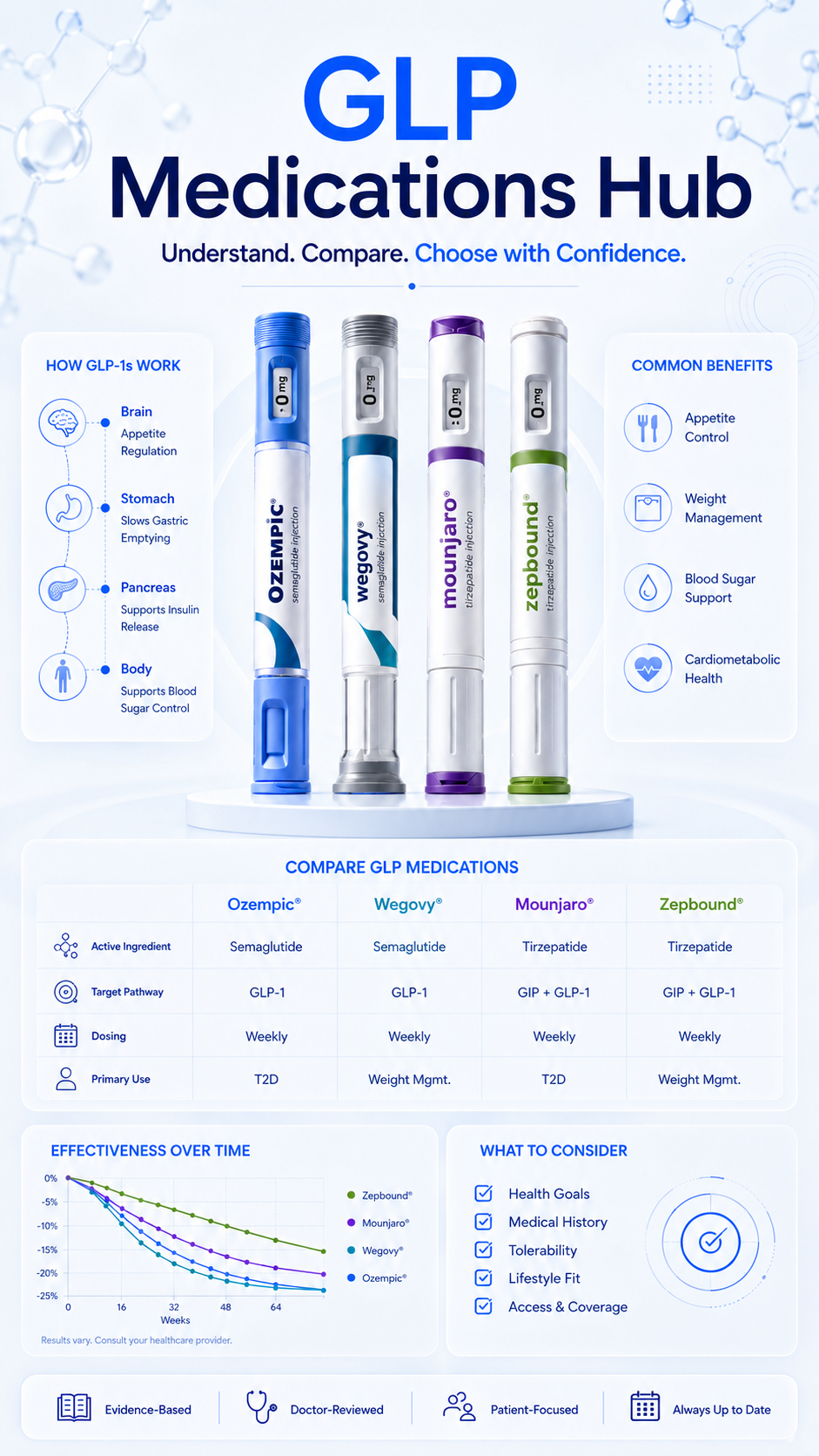
First, GLP medications can feel confusing because people often hear brand names before they understand the active ingredient. For example, Ozempic and Wegovy both contain semaglutide, while Mounjaro and Zepbound both contain tirzepatide.
However, the name is only the starting point. Patients also need to understand how the medication works, what it may feel like, what side effects can happen, how nutrition should change, and when provider guidance matters.
Direct Answer
What Are GLP Medications?
GLP medications are medicines that act on hormone signal pathways involved in appetite, fullness, digestion, blood sugar, insulin, and glucagon. Some act mainly on GLP-1, while newer medications may act on more than one pathway.
The Simple Explanation
GLP stands for glucagon-like peptide. GLP-1 is a natural hormone signal the body uses after eating.
Because GLP medications can copy or strengthen some of these signals, many patients feel full sooner, feel less hungry, or notice less food noise.
The Main Patient Takeaway
GLP medications are not all the same. Some contain semaglutide. Some contain tirzepatide. Others contain liraglutide, dulaglutide, exenatide, or lixisenatide.
Therefore, patients should learn the active ingredient, brand name, purpose, dosing routine, side effect profile, and provider plan before starting or switching medication.
Medication Names
Common GLP Medication Names Patients Hear
Patients often hear brand names such as Ozempic, Wegovy, Mounjaro, Zepbound, Saxenda, Victoza, Trulicity, Rybelsus, Byetta, Bydureon BCise, and Adlyxin, but the active ingredient tells you what medication it actually is.
GLP Medication Name Table
| Active Ingredient | Brand Name Examples | Medication Type | What Patients Usually Ask |
|---|---|---|---|
| Semaglutide | Ozempic, Wegovy, Rybelsus | GLP-1 receptor agonist | How is Ozempic different from Wegovy? How does semaglutide work? |
| Tirzepatide | Mounjaro, Zepbound | GIP and GLP-1 receptor agonist | How is tirzepatide different from semaglutide? What does dual action mean? |
| Liraglutide | Victoza, Saxenda | GLP-1 receptor agonist | How does daily liraglutide compare with weekly options? |
| Dulaglutide | Trulicity | GLP-1 receptor agonist | How does dulaglutide fit into diabetes care? |
| Exenatide | Byetta, Bydureon BCise | GLP-1 receptor agonist | How do older GLP medications compare with newer ones? |
| Lixisenatide | Adlyxin | GLP-1 receptor agonist | How does lixisenatide fit into blood sugar care? |
Active Ingredient Matters
First, the active ingredient tells you what the medication is. Brand names can change by purpose, dose, or product form.
Brand Names Can Confuse Patients
Next, two products may contain the same active ingredient but have different labels, doses, or intended uses.
Your Provider Connects The Details
Finally, a provider can help match the medication, dose, safety review, side effect plan, and follow-up schedule to the patient.
Medication Types
The Main Types Of GLP Medications
GLP medications can be grouped by which hormone pathways they activate, how often patients take them, and whether they are used in diabetes care, weight-management care, or another provider-guided plan.
GLP-1 Receptor Agonists
GLP-1 receptor agonists activate GLP-1 receptor pathways. These pathways affect appetite, fullness, stomach emptying, insulin response, glucagon signals, and blood sugar after eating.
Examples include semaglutide, liraglutide, dulaglutide, exenatide, and lixisenatide.
Dual GIP And GLP-1 Receptor Agonists
Dual GIP and GLP-1 receptor agonists activate two incretin pathways instead of one. Tirzepatide is the medication patients most often hear about in this category.
Because tirzepatide acts on both GIP and GLP-1 pathways, patients often compare it with semaglutide when asking about results, side effects, and fit.
Simple Medication Type Comparison
| Type | Pathway | Examples | Why It Matters |
|---|---|---|---|
| GLP-1 receptor agonist | GLP-1 | Semaglutide, liraglutide, dulaglutide, exenatide, lixisenatide | Helps patients understand appetite, fullness, digestion, and blood sugar signals. |
| GIP and GLP-1 receptor agonist | GIP and GLP-1 | Tirzepatide | Helps patients understand why tirzepatide differs from GLP-1-only medications. |
| Future or emerging incretin medicines | May involve additional pathways | Investigational therapies may change over time | Patients should separate approved medications from emerging research. |
How They Work
How GLP Medications Work In Plain Language
GLP medications work by changing body signals related to appetite, fullness, digestion, insulin, glucagon, and blood sugar response after eating.
They Help The Brain Read Fullness Signals
First, GLP medications can make fullness signals feel stronger. As a result, many patients feel satisfied with smaller meals.
They Can Slow Stomach Emptying
Next, food may leave the stomach more slowly. This can help fullness last longer, but it can also contribute to nausea, reflux, burping, or bloating.
They Help The Pancreas Respond After Meals
Also, incretin signaling helps the pancreas respond when blood sugar rises after eating. This is why many GLP medications connect strongly to type 2 diabetes care.
They Can Change Food Noise
Finally, some patients notice fewer food thoughts or less urgency around snacking. This can make behavior change feel more possible.
Body Systems Involved
- Brain appetite signals
- Fullness signals
- Stomach emptying
- Pancreas insulin response
- Liver glucagon signals
- Gut rhythm
- Blood sugar response
- Food noise and cravings
Semaglutide
Semaglutide: Ozempic, Wegovy, And Rybelsus
Semaglutide is a GLP-1 receptor agonist. Patients commonly hear the brand names Ozempic, Wegovy, and Rybelsus, but these products can differ by form, label, dose, and intended use.
What Semaglutide Does
Semaglutide activates GLP-1 receptor pathways. Because of that, patients often learn about appetite changes, earlier fullness, slower stomach emptying, blood sugar response, and digestive side effects.
Also, semaglutide education should include protein, hydration, side effects, strength training, and maintenance planning.
Common Semaglutide Questions
- How does semaglutide work?
- What should I eat on semaglutide?
- How much protein do I need?
- What side effects can happen?
- When do results usually appear?
- How do I maintain results?
Tirzepatide
Tirzepatide: Mounjaro And Zepbound
Tirzepatide is a GIP and GLP-1 receptor agonist. Patients commonly hear the brand names Mounjaro and Zepbound when learning about tirzepatide.
What Tirzepatide Does
Tirzepatide activates both GIP and GLP-1 receptor pathways. Because it acts on two pathways, patients often ask how it compares with semaglutide.
Also, tirzepatide can affect appetite, fullness, digestion, blood sugar response, food noise, side effects, and nutrition needs.
Common Tirzepatide Questions
- How does tirzepatide work?
- What does GIP mean?
- How is tirzepatide different from semaglutide?
- What should I eat on tirzepatide?
- How do side effects compare?
- What results timeline should I expect?
Older And Related GLP Medications
Liraglutide, Dulaglutide, Exenatide, And Lixisenatide
Semaglutide and tirzepatide get most of the attention today, but other GLP medications also matter because they helped shape GLP treatment, diabetes care, and patient education.
Liraglutide
Liraglutide is a GLP-1 receptor agonist. Patients may know it by brand names such as Victoza or Saxenda.
Because liraglutide has been used in different clinical settings, patients often ask how it compares with newer weekly options.
Dulaglutide
Dulaglutide is a GLP-1 receptor agonist. Patients may know it by the brand name Trulicity.
Many people hear about dulaglutide in type 2 diabetes care, so education often focuses on blood sugar, side effects, and provider-guided use.
Exenatide
Exenatide is a GLP-1 receptor agonist. Patients may know brand names such as Byetta or Bydureon BCise.
Because exenatide has different product forms, patients should follow product-specific instructions from their provider and medication guide.
Lixisenatide
Lixisenatide is a GLP-1 receptor agonist. Patients may know it by the brand name Adlyxin.
Like other GLP medications, lixisenatide education should include blood sugar response, stomach effects, side effects, and safe use guidance.
Why These Medications Still Matter
First, not every patient uses the newest medication. Next, insurance coverage, health history, tolerance, access, and provider judgment can all affect the medication choice. Therefore, a full GLP education hub should explain more than only semaglutide and tirzepatide.
Use And Purpose
GLP Medications For Diabetes, Weight Management, And Metabolic Health
GLP medications may be discussed in diabetes care, weight-management care, or broader metabolic health conversations, but each product has its own label, dose, warnings, and medical use.
Diabetes Care
First, GLP medications have a long history in type 2 diabetes care because they affect meal-related blood sugar response.
Weight Management
Next, some GLP medications are used in weight-management care because they can reduce appetite and increase fullness for some patients.
Metabolic Health
Also, patients may learn about GLP medications because weight, blood sugar, food noise, appetite, body composition, and long-term habits connect.
Why The Product Label Matters
A medication name alone does not tell the whole story. Therefore, patients should understand whether a product is prescribed for diabetes care, weight-management care, or another provider-guided reason. The official label, dose schedule, contraindications, warnings, and follow-up plan matter.
Comparison
Semaglutide Vs Tirzepatide: The Comparison Most Patients Ask About
Semaglutide and tirzepatide are different medications. Semaglutide activates GLP-1 receptor pathways, while tirzepatide activates both GIP and GLP-1 receptor pathways.
Semaglutide And Tirzepatide At A Glance
| Topic | Semaglutide | Tirzepatide |
|---|---|---|
| Medication class | GLP-1 receptor agonist | GIP and GLP-1 receptor agonist |
| Brand name examples | Ozempic, Wegovy, Rybelsus | Mounjaro, Zepbound |
| Key pathway | GLP-1 | GIP and GLP-1 |
| Shared patient topics | Appetite, fullness, digestion, nutrition, side effects, strength, maintenance | Appetite, fullness, digestion, nutrition, side effects, strength, maintenance |
| Best learning page | Semaglutide Guide | Tirzepatide Guide |
Do Not Choose Based On Hype
First, online attention should not decide care. A provider should review health history, medications, goals, side effects, access, and safety.
Compare The Whole Patient Experience
Next, compare more than expected weight change. Also compare side effects, nutrition needs, cost, coverage, follow-up, and long-term fit.
Patient Journey
What Patients Should Learn Before Starting A GLP Medication
Before starting a GLP medication, patients should understand the active ingredient, why it was prescribed, what side effects may happen, how eating may change, and what follow-up should look like.
Know The Active Ingredient
First, write down whether the medication is semaglutide, tirzepatide, liraglutide, dulaglutide, exenatide, or another medication.
Know The Goal
Next, ask what the medication should help with. The goal may involve blood sugar, weight, appetite, metabolic health, or another provider-guided plan.
Know The Side Effects
Also, learn what symptoms are common, what may improve with support, and what warning signs need prompt care.
Know The Lifestyle Plan
Finally, learn how protein, fluids, fiber, movement, sleep, and follow-up support better long-term results.
Before Starting Checklist
- Medication name and active ingredient
- Dose and schedule
- Storage instructions
- Injection or oral instructions
- Common side effects
- Warning signs
- Nutrition plan
- Protein plan
- Follow-up schedule
- Cost or coverage questions
Nutrition
Nutrition Matters With Every GLP Medication
GLP nutrition matters because appetite may drop, fullness may come faster, side effects may change food tolerance, and weight loss can increase the need to protect muscle.
Protein Comes First
First, protein supports muscle, strength, recovery, and fullness. So, smaller meals should still include protein when tolerated.
Hydration Matters
Next, fluids support digestion, energy, bowel habits, and safety. This matters when nausea, vomiting, diarrhea, or constipation occurs.
Fiber Needs Patience
Also, fiber may help bowel habits. However, adding too much too fast can worsen gas or bloating.
GLP Nutrition Quick Guide
| Nutrition Focus | Why It Matters | Simple Step |
|---|---|---|
| Protein | Supports muscle and strength during weight loss. | Eat protein early in meals. |
| Fluids | Supports digestion, energy, and hydration. | Sip fluids across the day. |
| Fiber | Supports bowel habits and meal quality. | Add slowly and track tolerance. |
| Smaller meals | May reduce nausea, reflux, and fullness discomfort. | Stop at comfortable fullness. |
| Meal planning | Helps prevent skipped meals and low protein. | Keep simple backup meals ready. |
Side Effects
Common GLP Medication Side Effects
GLP medication side effects often involve digestion because these medications can affect appetite, fullness, stomach emptying, gut rhythm, and food tolerance.
Nausea
First, nausea can happen when fullness feels stronger, meals are too large, or digestion changes.
Constipation Or Diarrhea
Next, bowel habits can change when food intake, fluids, fiber, and gut rhythm change.
Reflux Or Burping
Also, reflux, heartburn, burping, or bloating may happen when food stays in the stomach longer or meals feel too heavy.
Fatigue Or Low Intake
Finally, fatigue may connect to low calories, low protein, low fluids, poor sleep, or side effects.
Side Effects To Learn About
- Nausea
- Constipation
- Diarrhea
- Reflux
- Vomiting
- Dehydration
- Fatigue
- Injection site reactions
Warning Signs
When GLP Symptoms Need Medical Guidance
Patients should contact a provider when symptoms feel severe, continue, worsen, limit food or fluids, cause dehydration concerns, or feel unusual for their body.
Symptoms To Take Seriously
| Symptom Pattern | Why It Matters | Best Next Step |
|---|---|---|
| Repeated vomiting | Fluid loss can become unsafe. | Seek medical guidance promptly. |
| Severe or worsening belly pain | Severe pain can signal a more serious problem. | Seek urgent medical care. |
| Signs of dehydration | Dizziness, confusion, dry mouth, dark urine, or little urination can be serious. | Contact a provider or seek care. |
| Chest pain or trouble breathing | These symptoms may signal an emergency. | Seek emergency care. |
| Symptoms that limit eating or drinking | Low intake can affect energy, safety, and medication tolerance. | Contact your provider. |
Side Effects Are Not A Badge Of Honor
First, severe side effects do not mean the medication is working better. They mean the care plan needs attention.
Tracking Helps Providers Help You
Next, track timing, meals, fluids, dose changes, bowel habits, and symptom severity. These details can guide better care.
Medication Source
Medication Source, Safety, And Unapproved Products
Medication source matters because GLP products should come with clear prescribing guidance, safety review, dosing instructions, follow-up, and side effect support.
Use A Qualified Medical Pathway
First, GLP treatment should include a medical history review, medication review, risk review, dose education, side effect guidance, and follow-up.
Also, patients should know who to contact if symptoms occur.
Be Careful With Unsafe Sources
Next, the FDA has shared safety concerns about unapproved GLP-1 drugs used for weight loss. Therefore, patients should avoid unclear sources, fake labels, and self-directed treatment.
Because medication quality and dosing accuracy matter, provider-guided care is important.
Switching
Can Patients Switch Between GLP Medications?
Some patients may discuss switching GLP medications with a provider because of side effects, access, cost, results, tolerability, health history, or changing goals.
Do Not Switch Alone
First, switching medications can involve timing, dose differences, side effect history, medical risks, and insurance or pharmacy access.
Therefore, patients should not guess how to switch from one GLP medication to another without provider guidance.
Why Switching May Come Up
Next, a provider may review switching if side effects remain difficult, results feel unclear, medication access changes, or another option may fit the patient better.
However, switching does not replace nutrition, protein, hydration, strength training, and follow-up.
Questions To Ask Before Switching
- Why are we considering a switch?
- What medication am I taking now?
- What medication would I switch to?
- How should timing work?
- What side effects should I watch?
- How should nutrition change?
- When should follow-up happen?
Results
What Results Can Patients Expect From GLP Medications?
GLP medication results can include appetite changes, food noise changes, smaller portions, blood sugar changes when relevant, weight trends, side effects, strength changes, and long-term habit changes.
Appetite May Change First
First, some patients notice less hunger or earlier fullness before the scale changes much.
Weight Trends Take Time
Next, weight may change over weeks and months. However, results rarely move in a perfect straight line.
Body Composition Matters
Also, weight loss can include fat, water, and lean mass. Therefore, protein and strength training matter.
Maintenance Starts Early
Finally, long-term success depends on habits built during treatment, not only on medication effects.
Track More Than Weight
- Hunger
- Fullness
- Food noise
- Side effects
- Protein intake
- Hydration
- Strength
- Energy
- Clothing fit
- Consistency
Common Mistakes
Common GLP Medication Mistakes
Common GLP medication mistakes include focusing only on the shot, ignoring nutrition, skipping protein, drinking too little, missing follow-up, or choosing care based on online hype.
Mistake And Better Step Table
| Common Mistake | Why It Can Backfire | Better Step |
|---|---|---|
| Only knowing the brand name | The active ingredient explains what medication it is. | Learn both the brand name and active ingredient. |
| Eating as little as possible | Very low intake can hurt protein, fluids, energy, and muscle support. | Use smaller but nutrient-dense meals. |
| Ignoring side effects | Symptoms can limit food, fluids, and safety. | Track symptoms and ask for help early. |
| Skipping strength training | Weight loss can include lean mass. | Add strength activity when appropriate. |
| Following social media dosing advice | Medication decisions need health history and provider guidance. | Follow the prescribed plan and ask your provider questions. |
| Waiting to plan maintenance | Long-term results need habits before goal weight. | Build protein, hydration, movement, and follow-up habits early. |
Learning Library
Explore The RealGLP.Life Medication Learning Path
The best way to understand GLP medications is to move from the full medication overview into medication-specific guides, then into nutrition, side effects, exercise, and maintenance.
Semaglutide Guide
First, learn how semaglutide works, what patients may notice, and how to plan for treatment.
Tirzepatide Guide
Next, learn how tirzepatide works through GIP and GLP-1 pathways.
Compare Medications
Also, compare medication names, active ingredients, pathways, side effects, and patient fit.
GLP Nutrition
Then, learn how protein, fluids, fiber, and meal planning support treatment.
GLP Side Effects
However, side effects can shape the whole experience. Learn what to watch and when to ask for help.
GLP Science
Finally, learn the science behind appetite, food noise, blood sugar, GIP, GLP-1, and body signals.
Helpful Medical Sources
Keep Learning From Trusted Health Sources
RealGLP.Life explains GLP medications in plain language. These medical and government sources can help patients keep learning from trusted organizations.
MedlinePlus GLP-1 Agonists
MedlinePlus explains GLP-1 agonists in patient-friendly language, including their role in type 2 diabetes and weight-related care.
MedlinePlus Semaglutide
MedlinePlus provides patient-friendly information about semaglutide injection, including safety notes and medication education.
MedlinePlus Tirzepatide
MedlinePlus provides patient-friendly information about tirzepatide injection, including how it works and common side effects.
NIDDK Weight-Management Medicines
NIDDK explains prescription weight-management medicines and why patients should discuss risks and benefits with a healthcare professional.
FDA Wegovy Prescribing Information
The FDA label gives official prescribing information for Wegovy, including semaglutide dosing, warnings, and safety topics.
FDA GLP-1 Safety Information
The FDA shares safety concerns about unapproved GLP-1 drugs used for weight loss, including concerns about fraudulent and unsafe products.
Expert Tip
Angela Jayes, NP On Understanding GLP Medications
Know What You Are Taking
Patients should know the active ingredient, brand name, dose schedule, side effects, and follow-up plan before starting or switching a GLP medication.
Do Not Let Low Appetite Replace A Health Plan
Also, lower hunger can help, but patients still need protein, fluids, fiber as tolerated, strength training, and symptom support.
Ask Questions Early
Finally, confusion, severe side effects, low intake, dehydration signs, or uncertainty about medication source should prompt a conversation with a qualified healthcare provider.
FAQ
Common GLP Medication Questions
These short answers help patients understand the names, types, uses, and next steps for GLP medication education.
What are GLP medications?
GLP medications are medicines that act on hormone pathways involved in appetite, fullness, digestion, insulin response, glucagon signals, and blood sugar.
What are common GLP medication names?
Common names include semaglutide, tirzepatide, liraglutide, dulaglutide, exenatide, and lixisenatide. Common brand names include Ozempic, Wegovy, Mounjaro, Zepbound, Saxenda, Victoza, Trulicity, Rybelsus, Byetta, Bydureon BCise, and Adlyxin.
Are Ozempic and Wegovy the same?
Ozempic and Wegovy both contain semaglutide. However, they are different products with different labels, dosing details, and intended uses.
Are Mounjaro and Zepbound the same?
Mounjaro and Zepbound both contain tirzepatide. However, they are different products with different labels, dosing details, and intended uses.
What is the difference between semaglutide and tirzepatide?
Semaglutide activates GLP-1 receptor pathways. Tirzepatide activates both GIP and GLP-1 receptor pathways.
Do GLP medications replace nutrition and exercise?
No. GLP medications can change body signals, but protein, hydration, fiber, movement, strength training, sleep, side effect support, and follow-up still matter.
Educational Use Only
This GLP Medication Guide Does Not Replace Medical Care
Education Helps You Understand Your Options
RealGLP.Life provides educational content only. It does not provide medical advice, diagnosis, prescribing, or treatment.
Your Provider Guides Personal Decisions
Because GLP medication decisions depend on health history, medications, labs, symptoms, goals, side effects, access, and risk factors, speak with a qualified healthcare provider for personal guidance.
Urgent Symptoms Need Prompt Care
If you have severe belly pain, repeated vomiting, dehydration signs, chest pain, shortness of breath, fainting, confusion, facial swelling, or signs of a medical emergency, seek medical care right away.
Want Help Understanding GLP Medication Options?
Start with clear education. Then, when you need personal guidance, speak with a qualified provider who can connect GLP medication options to your health history and goals.